

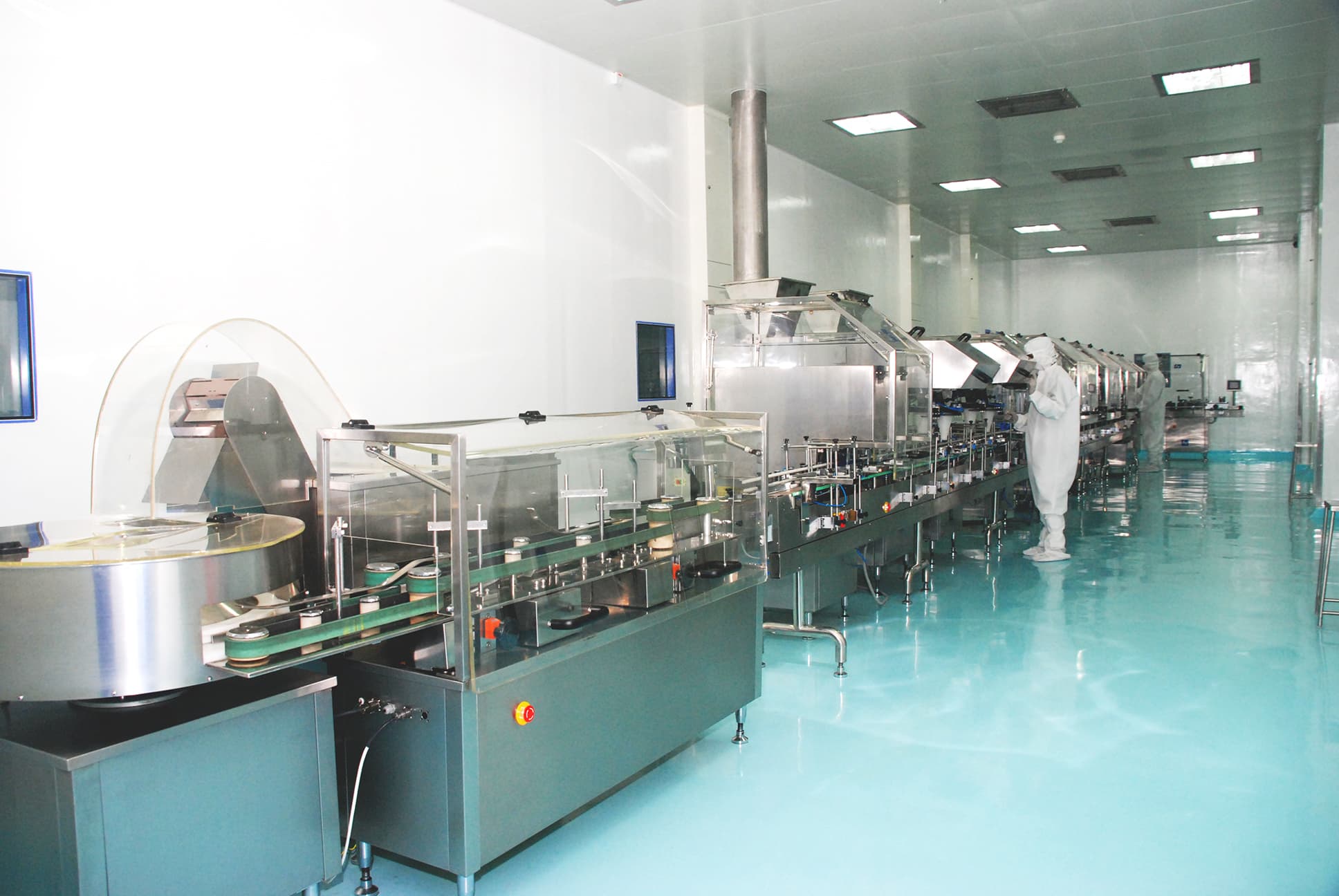
Where clean air earns its keep
Laminar Air Flow Uses & Applications
Laminar air flow is used wherever a stray particle ruins the work: microbiology and cell culture, sterile dispensing, hospital pharmacy, electronics and tissue culture. Same physics, very different jobs, and each comes with a limitation that bites if you pick the wrong setup. Fabtech builds the units in-house, so here is where LAF is used, and where it is not the right tool.
- ISO 14644-1
- EU-GMP Annex 1
- HEPA H13 / H14
- Made in-house
This guide is written by the engineers who've built controlled environments for every industry that needs controlled air since 2004 (more than 2,000 delivered) and who manufacture laminar flow units in-house, so the advice below is the same we'd give a client sizing their own.
- Since 2004
- Building controlled environments
- 2,000+
- Delivered across every sector
- In-house
- Horizontal and vertical laminar flow units
What laminar air flow is used for
Laminar air flow is used to keep a small working area free of airborne particles, so contamination-sensitive work stays clean. You'll find it wherever that matters most: microbiology and cell culture, sterile pharmaceutical dispensing and sterility testing, hospital and compounding pharmacy, electronics and optics assembly, and plant tissue culture.
- ISO Class 5
- EU-GMP Grade A
- HEPA H13 / H14
- Schedule M
- WHO-GMP
In each case it's the same need: a controlled, particle-free zone at a single bench.
What unites them is a single problem (a stray particle ruins the work) and a single solution (a one-directional sweep of HEPA-filtered air). What differs, application by application, is the limitation each one runs into.
Laminar vs turbulent flow: why the difference is the whole point
- Laminar
- Smooth, parallel layers moving in one direction
- Turbulent
- Eddies and mixing, with no preferred path
- The switch
- The Reynolds number: low is laminar, high is turbulent
- Kept in range by
- Face velocity and uniformity, measured at validation
In an ordinary room the air is turbulent: it eddies and mixes, so a particle lifted off a bench can travel anywhere, including straight back onto whatever you're trying to keep clean. Laminar flow removes that randomness. By moving air in straight, parallel layers at a steady speed, it gives every particle a single exit path: away from the work and out of the zone.
In fluid-dynamics terms, flow is laminar when it's smooth and layered and turbulent when it's chaotic, with the switch governed by the Reynolds number (low = laminar, high = turbulent). A laminar-flow device is engineered to sit firmly on the laminar side of that line across the work opening. That's exactly why face velocity and uniformity are measured during validation, not assumed. If velocity drifts too low, or an obstruction breaks the sheet, the flow turns turbulent in places and the clean zone is no longer reliable. That single fact is why good practice (below) is really just don't disturb the smooth sheet of air.
- Unidirectional supply
- Room air, no preferred path
- Air route
FIG. 01The same open work under two air regimes. Turbulent room air has no preferred direction, so a particle lifted off the bench can re-enter the work zone. A HEPA-filtered sheet at a steady velocity gives it one exit path. The Reynolds number sets which regime you are in.
The one rule before any application: what is it protecting?
Before matching a clean bench to any job, settle this: a laminar flow hood protects the product, not the operator. It bathes the work in clean air, then pushes that air back toward the room and the person.
It does not contain hazardous fumes, aerosols or biological material. That's the job of a fume hood or a biosafety cabinet, which are different devices (the main laminar air flow page has the full side-by-side). Get that choice right first; every application below assumes the work is about keeping a clean product clean, not making a dangerous process safe.
- Product
- Protected
- Operator
- Not protected
- Environment
- Not protected
FIG. 02A clean bench pushes filtered air out across the work and on toward the room. Protection travels with the air, so it reaches the product and never the person.
- Laminar flow hood
- Protects the product only. Filtered air sweeps the work, then leaves toward the room and the operator.
- Biosafety cabinet (BSC)
- Protects the product, the operator and the environment. The right choice for pathogens, biohazardous cells and BSL-2 or BSL-3 work.
- Fume hood
- Protects the operator and the environment. Captures chemical fumes, vapours and volatile solvents and exhausts them away.
Applications by industry and use
Five places a laminar work zone earns its keep, each with the contaminant it is holding off and the configuration that usually fits.
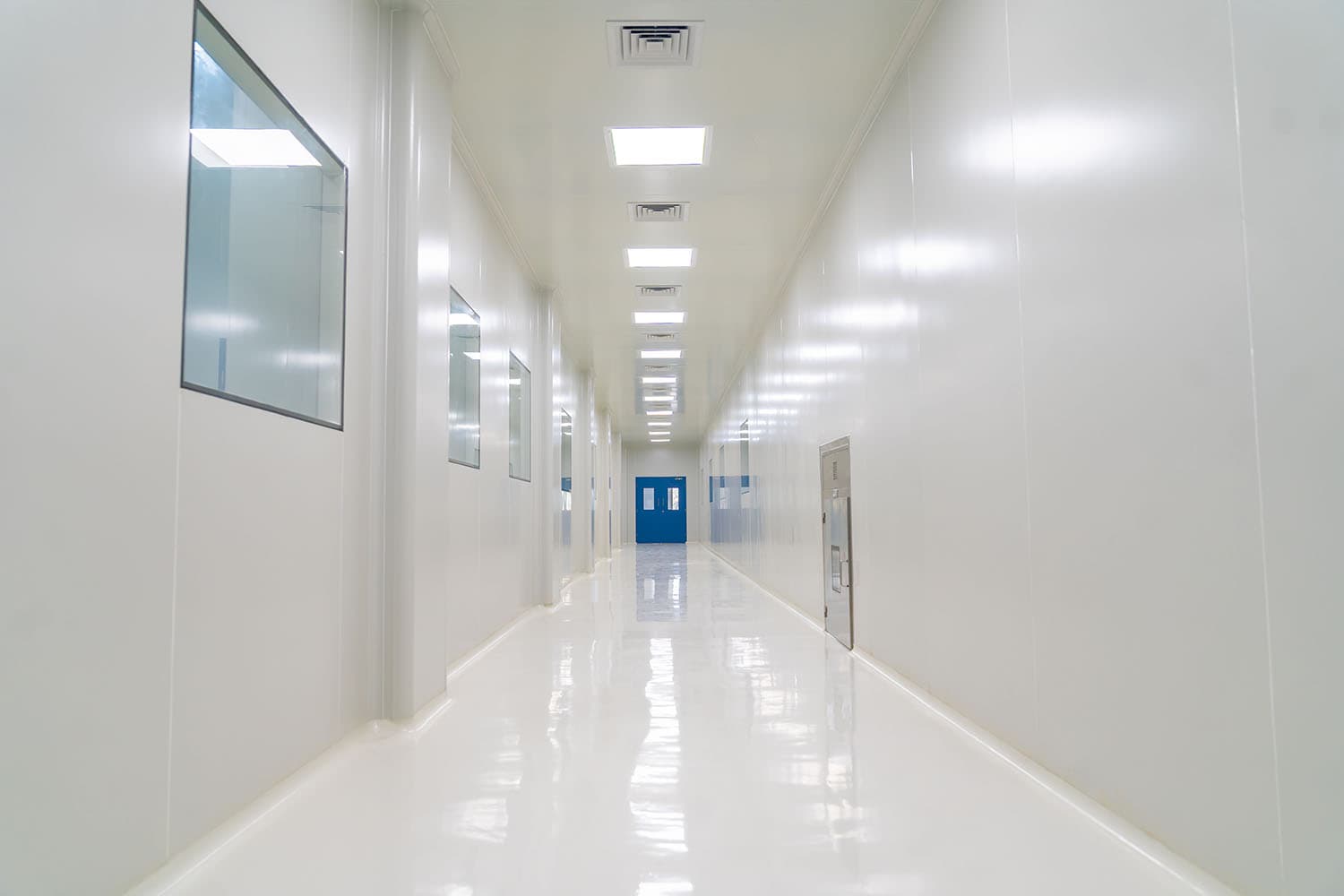
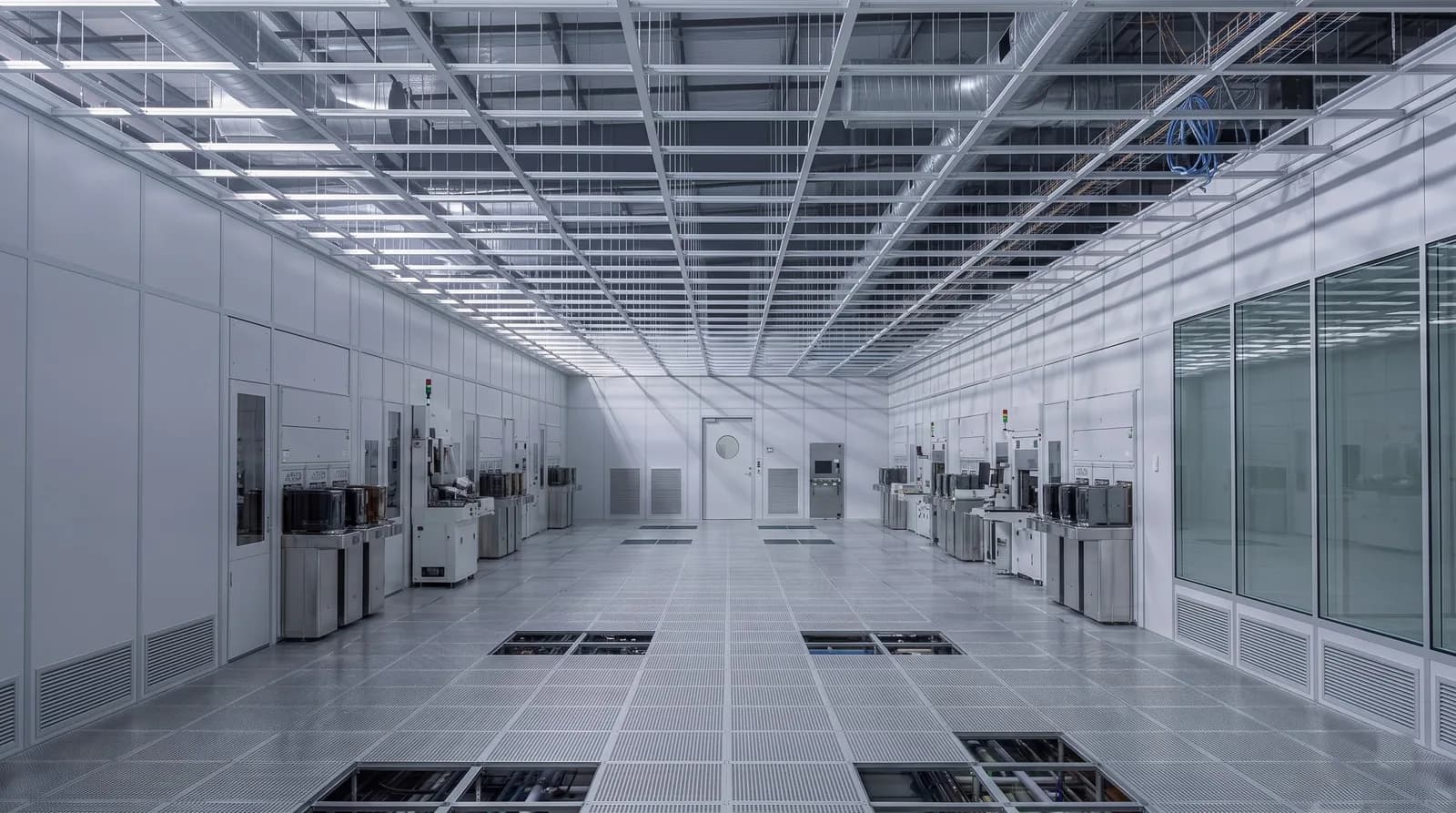
- Microbiology and culture workThe enemy is a stray microbe landing where it shouldn't. Pouring agar plates, sub-culturing, preparing media and transferring cultures all expose an open, nutrient-rich surface to the air, and a single airborne spore can ruin an experiment. A clean bench gives the technician an effectively sterile working stream. Horizontal benches are popular here because clean air passes over the open plates first. (Pathogenic organisms need a biosafety cabinet, not a clean bench; see the one rule above.)
- Hospital & compounding pharmacyStaff prepare doses that go straight into patients (IV admixtures, TPN, reconstituted injectables), so airborne contamination is a direct patient-safety risk. A clean bench keeps the compounding zone sterile. The rule: clean bench for non-hazardous sterile compounding; hazardous drugs (cytotoxics) must be prepared in a containment device that also protects the operator.
- Cell & plant tissue cultureSplitting cells, changing media, inoculating explants: the warm, nutrient-rich conditions that grow your cells grow any stray microbe too. A clean bench (vertical units are common in cell-culture labs) keeps open flasks and pipette work in a clean stream over weeks of handling. Biohazardous cells belong in a biosafety cabinet.
Four numbers decide whether a laminar work zone is doing its job, whatever the application above it. Each of them is measured on site, not taken on trust.
- Class at the work zoneISO 14644-1, the legacy Class 100
- ISO Class 5
- Particles per cubic metreAt or above 0.5 micron, the ISO Class 5 limit
- 3,520
- Nominal design velocityUnidirectional supply across the filter face
- 0.45 m/s
- HEPA H14 at MPPSH13 is 99.95% at MPPS, both to EN 1822
- 99.995%
The application matrix: right config, and the limitation that bites
Start with the floor plan. Five zones of one facility, each numbered, each with the orientation that suits the work done in it and the class the zone is held to.
- Room shell and benches
- Unidirectional supply
- Air leaving the zone
FIG. 03Five application zones of one facility in plan, typical arrangement, not to scale. A cross inside a circle is air travelling down into the plan, so a vertical unit; an arrow marching across the bench is a horizontal unit. Air leaves every clean zone through its door into the corridor, which is the pressure cascade doing its job.
- 1
Sterility testing suite
Sterility testing of finished product, in an isolated suite of its own
ISO Class 5 critical zone inside an ISO Class 7 background room
Vertical downflowDownflow sweeps away from the operator - 2
Media fill preparation
Weighing, dispensing and media fill preparation ahead of an aseptic run
ISO Class 5 critical zone, EU-GMP Grade A held over the open product
Vertical downflowDownflow protects the open product - 3
Microbiology plating
Pouring agar plates, sub-culturing and media preparation on an open bench
ISO Class 5 at the bench, ISO Class 8 background room
Horizontal crossflowClean air reaches the open plates first - 4
Electronics assembly
Board, lens and sensor assembly and inspection along a short line
ISO Class 5 at the bench, ISO Class 7 production room
Horizontal crossflowAir crosses the bench, then leaves - 5
Sample handling
Raw material sampling and sub-division before it enters the process
ISO Class 5 at the bench, ISO Class 8 background room
Vertical downflowDownflow keeps the open sample swept
The pattern across every application above: laminar flow solves the particle problem brilliantly and the hazard problem not at all. So the limitation that bites is almost always the work was actually hazardous, and this device protects the product, not the person.
Good practice: getting the most from a clean bench
The smooth sheet of clean air is fragile. Block it, crowd it or disturb it and the protection drops fast:
- Don't block the airflowKeep large items and your arms out of the direct filter-to-work path; an obstruction creates turbulence and a dead zone downstream where particles settle.
- Work clean-to-dirty, in line with the flowCleanest, most critical items where the air reaches first; waste where it exits. On a horizontal bench this is back-to-front, and the horizontal page has the zoning map.
- Use good aseptic techniqueThe bench reduces airborne contamination; it doesn't sterilise your gloves, tools or the items you bring in.
- Let the unit purge firstRun the blower a few minutes so the zone is fully flushed before you start; keep clutter minimal so the stream stays uniform.
- Watch the manometerA rising reading means the HEPA is loading; falling velocity undermines the laminar flow.
A brief note on cleaning and validation
A clean bench is only as good as its last test, so its clean zone is verified, not assumed: HEPA integrity by a PAO/DOP aerosol challenge, particle counts to ISO 14644-1, and airflow velocity and uniformity measured across the filter face, repeated periodically and after any filter change, with surfaces cleaned and disinfected in routine use.
In a regulated setting this is part of formal DQ/IQ/OQ/PQ, and the depth of testing scales with how critical the application is. The configuration-specific validation detail lives on the horizontal and vertical pages.
- 01PAO / DOP scan
HEPA integrity
A PAO/DOP aerosol is introduced upstream and the downstream face is scanned, so a pinhole or a bypass at the seal is found before the work is.
- 02ISO 14644-1
Particle count
Counts are taken in the work zone with a calibrated counter and read against the class the application needs, which for a clean bench is ISO Class 5.
- 03Grid traverse
Face velocity
Velocity is measured on a grid across the filter face, so the sheet is proven to be even rather than merely present at one point.
- 04DQ / IQ / OQ / PQ
Requalification
The same tests are repeated periodically and after any filter change, alongside routine cleaning and disinfection of every surface in the zone.
FIG. 04The verification sequence behind a clean zone, run at qualification and repeated on a schedule.
How Fabtech approaches laminar airflow
If a single clean bench isn't enough and you need laminar airflow built into a whole room, that's where we come in. Fabtech Cleanrooms designs, builds and validates complete cleanrooms across India. Unidirectional (laminar) airflow is core to how those rooms hold their ISO and EU-GMP grades. Sometimes that means a single bench. Sometimes it means a HEPA or FFU ceiling over a whole process.
Fabtech manufactures laminar air flow units in-house (horizontal and vertical) and delivers laminar airflow both as standalone benches and within turnkey cleanrooms. If you're specifying laminar airflow for a pharma, biotech, electronics or research facility and want to talk configuration, classification and validation, see turnkey cleanroom solutions.
- Turnkey cleanroom solutions
- Cleanroom HVAC systems
- ISO classification of cleanrooms
- All cleanroom equipment
Or just tell us what you're protecting and whether it's one bench or a whole room, and the engineers who'd size and spec it will talk it through with you, no obligation.
Size and spec it with an engineerLaminar air flow uses, common questions
Laminar air flow creates a small, particle-free working zone for contamination-sensitive work: microbiology and cell culture, sterile pharmaceutical dispensing and sterility testing, hospital and compounding pharmacy, electronics and optics assembly, and plant tissue culture. It keeps clean air sweeping over the work so airborne particles don't settle on it.
Laminar flow is air moving in smooth, parallel layers in one direction; turbulent flow swirls and mixes randomly. For clean work it matters because laminar flow carries particles along a single, predictable path away from the product, while turbulent room air can move a particle anywhere, including back onto the work. The transition is governed by the Reynolds number.
In a lab, a laminar flow hood (clean bench) gives a sterile-feeling work zone for pouring plates, sub-culturing, preparing media, cell and tissue culture, and assembling sensitive components: any work that must stay free of airborne particles or microbes.
No. A laminar flow hood protects the product with clean air but does not protect the operator; it can blow material toward them. A biosafety cabinet protects the operator and environment from hazardous biological material. Choose by what you need to protect.
No. For pathogenic microbes or biohazardous cells use a biosafety cabinet; for chemical fumes or volatile solvents use a fume hood; for hazardous-drug compounding use a containment device. A clean bench keeps a clean product clean; it does not make a dangerous process safe.
Which standard bites depends on the application. Across all of them a correctly functioning laminar work zone meets ISO Class 5 of ISO 14644-1 (the particle-count standard, legacy Class 100). Sterile pharmaceutical work must additionally hold a EU-GMP Annex 1, Grade A zone over the critical operation; in India, Schedule M and WHO-GMP set the same expectation; for electronics, optics and research the ISO 14644-1 class is usually the governing spec on its own.
Tell us what you're protecting
One bench or a whole Grade A suite: name the work, the class it has to hold and the room it runs in. The engineers who'd size it come back with the orientation and spec that fit, not a brochure.