

Clean air, engineered for the product
Laminar air flow
Laminar air flow is HEPA-filtered air moving one way in smooth, parallel layers, so particles leave the work instead of settling on it. Fabtech builds laminar air flow units in-house in India. They protect the product, never the person.
- ISO Class 5
- EU-GMP Grade A
- HEPA H13 / H14
- 0.45 m/s nominal
- Made in-house
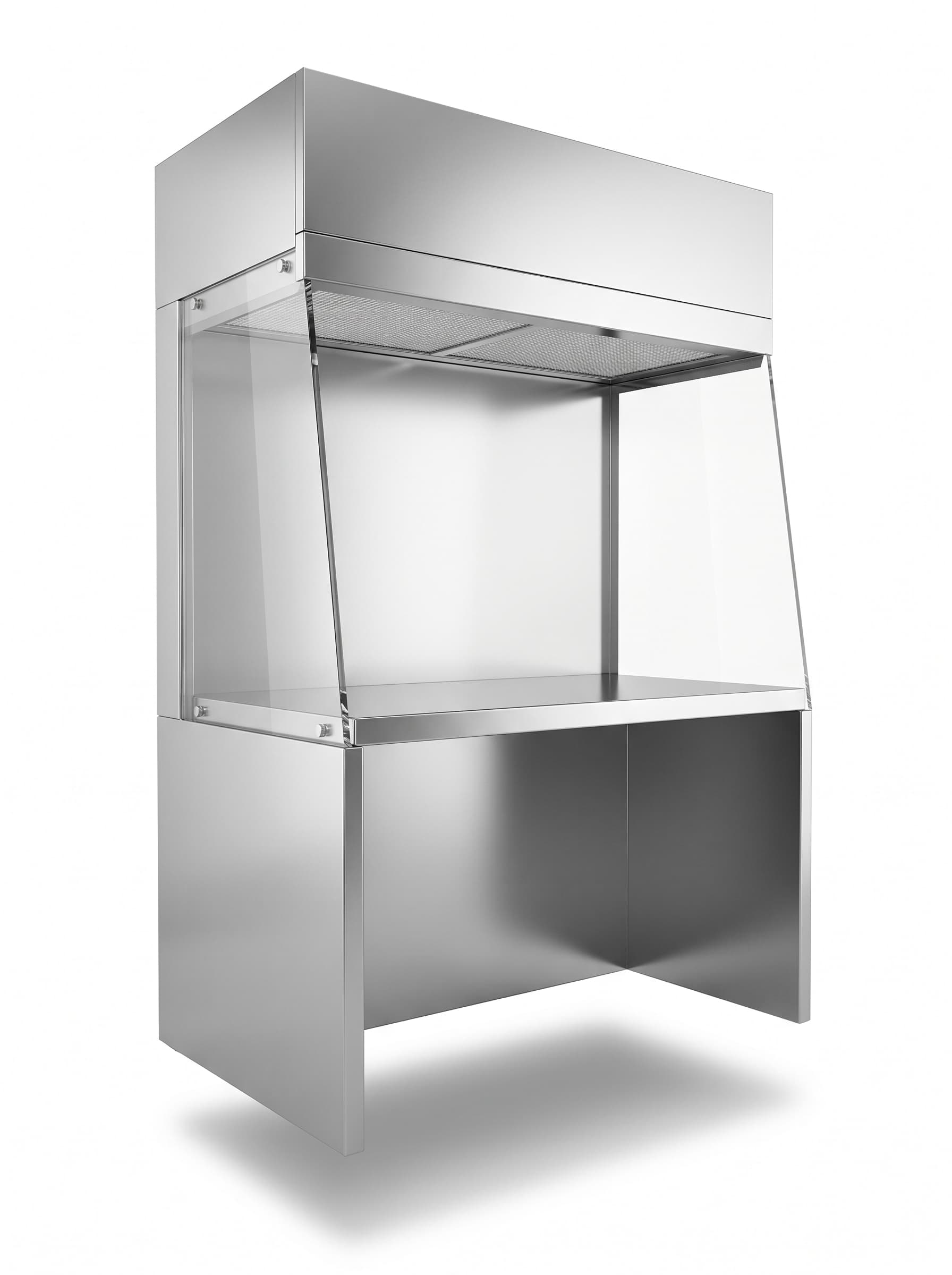
FIG. 01Laminar air flow unit, illustrative. Configuration and construction are confirmed per project.
What laminar air flow is
Laminar air flow is air moving in smooth, parallel layers that travel in one direction and do not mix. It is the opposite of the swirling air in an ordinary room. A laminar air flow (LAF) unit puts that principle to work: it pushes HEPA-filtered air across a work zone in a steady, unidirectional sheet. Particles shed by hands, tools or the process are carried off the work instead of settling, so the protected area stays effectively particle-free.
The single fact to hold before any other: that clean sheet of air leaves the filter and travels toward you. A LAF unit guards the work, not the worker. The next two sections exist because the device that does the opposite job can look almost identical.
In cleanroom language the correct term is unidirectional airflow: HEPA H13 or H14 filtered air delivered as an even sheet at 0.45 m/s nominal. ISO 14644-1 classifies the result by particle count rather than by the equipment, so a LAF work zone is only ISO Class 5 because a particle counter says so on test day. The same physics scaled up from a bench to a whole ceiling is what delivers an EU-GMP Annex 1 Grade A zone over a filling line.
- ISO Class 5
- Work-zone class a LAF holds
- 0.45 m/s
- Nominal face velocity
- 2,000+
- Controlled environments since 2004
HEPA vs LAF: not a choice you make
It's an easy one to get tangled up in, so let's settle it first: HEPA and LAF are not alternatives you pick between. They describe two different things, and a laminar air flow unit needs both.
- 01
The component
HEPA is the filter
The component that actually removes the particles. The name stands for High-Efficiency Particulate Air. On its own, a filter says nothing about how the cleaned air reaches the work. The grades and capture rates sit in the anatomy table further down. - 02
The pattern
LAF is the airflow pattern
Unidirectional, laminar, delivery of that filtered air as a smooth, parallel sheet across the work, so particles have one exit path. Filtered air can still be turbulent, which is how a general cleanroom dilutes contamination. Laminar is the discipline of making the air flow in straight lines. - 03
The limit
A filter holds particles, not gas
HEPA captures particles only, never gases or vapour. That is why a laminar air flow unit is the wrong tool for chemical fumes. That job belongs to a fume hood, which pulls air away from the operator instead of pushing it toward them.
FIG. 02The two halves of a laminar air flow unit. The filter removes the particles, the unidirectional sheet delivers the cleaned air, and neither one substitutes for the other.
So a laminar air flow unit is simply a filter, a fan and the geometry that makes the clean air flow in one direction. When a search result asks "HEPA or LAF?", the real answer is both: the filter cleans, the laminar pattern delivers.
- HEPA
- The filterH13 / H14 to EN 1822, at MPPS
- LAF
- The airflow pattern0.45 m/s nominal, unidirectional
Laminar flow vs fume hood vs biosafety cabinet
Three enclosures that look alike protect completely different things. Picking the wrong one exposes either the product or the operator. It is the most common and most dangerous mix-up in lab equipment.
| Enclosure | Protects | Airflow direction | Right for | Wrong for |
|---|---|---|---|---|
| Laminar air flowTHIS PAGE | The product or sample | Clean HEPA air blown out over the work, toward you | Particle-sensitive work: sterile prep, culture, electronics | Hazardous chemicals or biology. It blows them at you |
| Fume hood | The operator | Room air pulled in across the sash and exhausted away | Toxic, corrosive or volatile chemical fumes | Keeping a sample clean. It doesn't |
| Biosafety cabinet | Operator, product and environment | HEPA downflow plus inward containment | Biohazards: live cultures, infectious agents | Significant volatile or flammable chemicals. Most BSCs aren't rated for them |
FIG. 03Protection direction is the deciding criterion, not cabinet appearance.
The rule of thumb: protect the product, use laminar flow; chemical hazard, use a fume hood; biological hazard, use a biosafety cabinet.
A laminar flow unit and a fume hood are near-opposites. One pushes clean air out over the work; the other pulls room air in and away. They are never interchangeable. And because HEPA captures particles only, never gas, a laminar unit offers no protection at all against vapours or aerosols.
How a laminar air flow unit works
A LAF unit is, at heart, a clean wind tunnel pointed at your work. Five things act as one system, not "a fan".
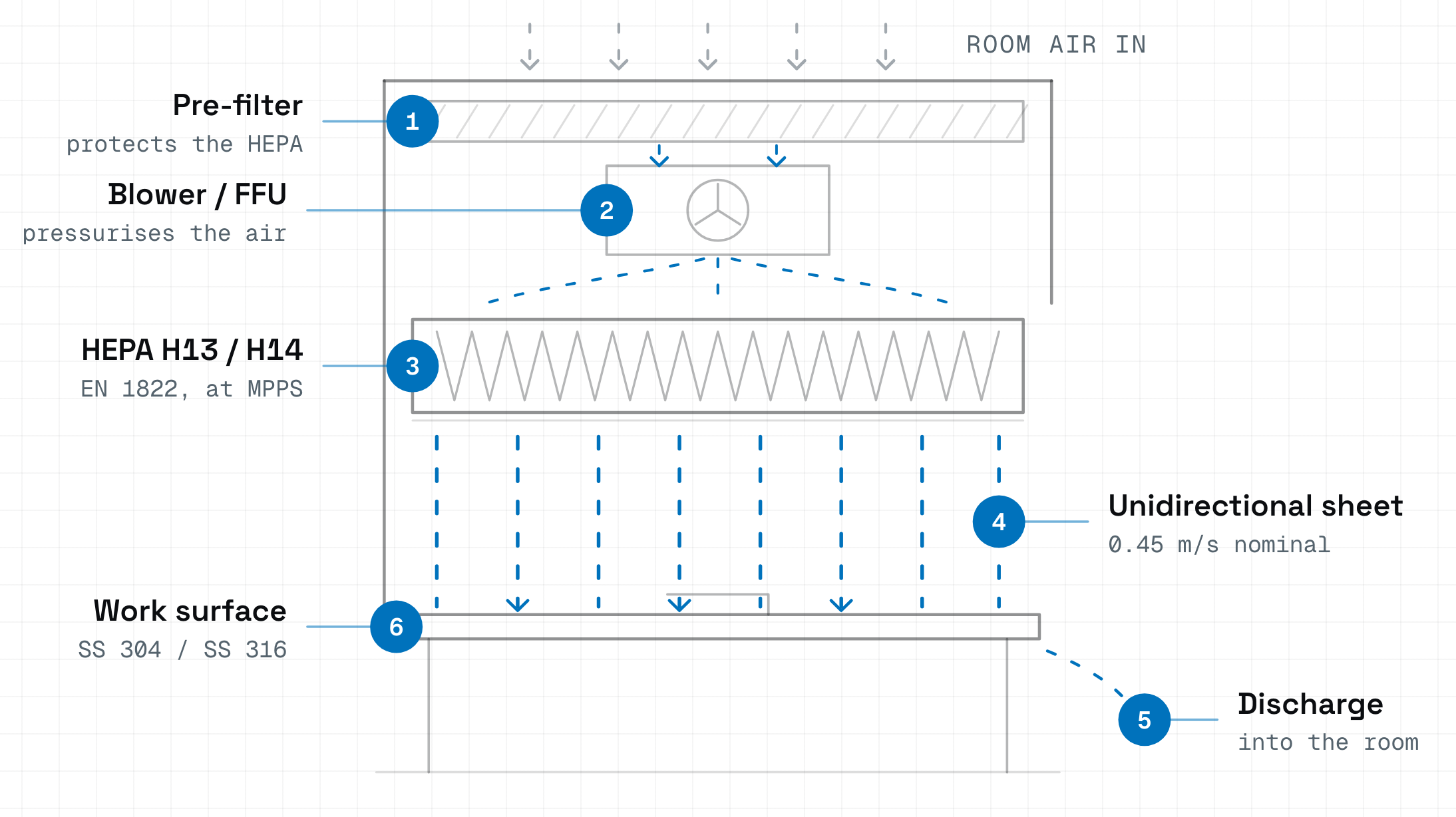
FIG. 04Laminar air flow diagram: room air is drawn through a pre-filter, pressurised by the blower or fan-filter unit, cleaned by the HEPA pack, then delivered across the work zone as a unidirectional sheet at 0.45 m/s nominal before it spills back into the room.
- 01
Intake and pre-filtration
Room air is drawn in through a coarse pre-filter that catches lint, dust and larger particles. That protects the expensive final filter and extends its life.
- 02
Pressurisation
A blower, or a self-contained fan-filter unit (FFU), raises the air to a positive pressure. Only then can it be pushed evenly through the dense final filter.
- 03
HEPA filtration
The air passes through the HEPA filter, the heart of the unit and the component integrity-tested at every validation. This is where the contamination is actually removed.
- 04
Unidirectional delivery
The cleaned air leaves the full filter face as one uniform sheet and crosses the work zone at 0.45 m/s, about 90 feet per minute. That is fast enough to hold laminar flow and continuously flush particles away.
- 05
Discharge
The air spills off the work area back into the room. A LAF unit recirculates room air through a filter; it is not a containment device and does nothing about hazardous fumes or aerosols.
Held within that stream, the work zone meets ISO Class 5, the cleanroom class covered in the standards section below. The proof is a measured count on test day, not the spec sheet.
The laminar air flow family: the formats you will meet
Laminar air flow is a family that shares one principle, filtered air moving in one direction, in different formats.
LAF bench / clean bench
A self-contained workstation for one operator. The everyday lab unit, and the format most people picture when they say LAF.
LAF cabinet / hood
An enclosed version with side walls for a more stable stream against room draughts.
Clean-air canopy / curtained LAF
A larger overhead unit protecting a process line or a filling point, usually with strip curtains to hold the sheet in place.
By direction of flow, every bench or cabinet is one of two configurations: horizontal or vertical. The choice changes where the clean air goes and what the unit suits. It gets its own section next, and a full page each.
Horizontal vs vertical laminar air flow: the short version
The only real difference is the direction the clean air travels. This is the overview; each has a full page with the engineering trade-offs, sizing and validation.
FIG. 05The same principle, two directions. Horizontal delivers the sheet across the bench toward the operator; vertical delivers it down onto the work and spills it off the front.
Configuration A
Horizontal LAF
The long, linear bench format.
Configuration B
Vertical LAF
The downflow, sterile-pharma format.
- Filter and flow
- Filter at the back; air flows toward the operator
- Filter in the roof; air flows downward onto the work
- Best for
- Long, linear clean-to-dirty bench work, plate pouring, electronics and optics assembly
- Sterile pharma dispensing and sampling, powder handling, taller setups
- Footprint
- Deeper bench, lower overall height
- Taller cabinet, shallower bench
- The catch
- First air is cleanest at the filter: lay the bench out accordingly
- Needs an even downward sheet: uniformity is the thing to validate
Neither is "better"; it depends on the process, the operator-safety picture and the room.
Which laminar air flow setup do you need?
A fast way to narrow it before the detailed pages.
- Long, linear bench workPlate pouring, electronics and optics assembly. Start with horizontal LAF.
- Sterile dispensingPharma dispensing and sampling, powder handling, tall apparatus. Start with vertical, downflow, LAF.
- A whole area, not a benchIf the unidirectional zone has to cover a process rather than a worktop, you are specifying an FFU or HEPA ceiling, which is cleanroom design.
- Chemical fumesIf the job is protecting the operator from vapour, a laminar unit is the wrong device. You need a fume hood.
- A biological hazardLive cultures and infectious agents need containment as well as clean air, which means a biosafety cabinet.
- Where LAF is usedIf you are still mapping the ground, the applications and uses guide walks each setting in depth.
- Pricing a unitWhat moves the number on a laminar air flow unit in India, and what a specification has to say before anyone can price it.
Anatomy of a LAF unit: the parts that make it clean
The clean zone is the sum of these parts, not the cabinet alone.
FIG. 06An even sheet off the full filter face, at a velocity that keeps the flow laminar all the way down to the work, is the difference between a clean bench and a box with a fan in it.
- HEPA filterThe final filter. It defines the cleanliness of the delivered air and is the integrity-tested heart of the unit; the grades sit in the table below.
- Pre-filterTraps coarse dust to protect the final filter; replaced more often.
- Blower / FFUGenerates the airflow and is balanced to hold face velocity as the filter loads.
- Plenum and diffuserSpread air evenly across the full filter face, so the stream is a uniform sheet, not a jet.
- Work surfaceStainless steel: SS 304 as standard, SS 316 for aseptic or corrosive duty; easy to clean and sanitise.
- ManometerShows filter loading; a rising reading signals the final filter is nearing change-out.
- Lighting and UVTask lighting and, on some microbiology units, germicidal UV.
At a glance
- Filter grade
- H13 / H14 to EN 1822. Fabtech supplies both.
- Filter efficiency
- H13: 99.95%, H14: 99.995%, at MPPS
- Face velocity
- 0.45 m/s, roughly 90 fpm, nominal design set-point
- Cleanliness
- ISO Class 5 to ISO 14644-1 in the work zone
- Configuration
- Horizontal or vertical, manufactured in-house
- Work surface
- SS 304 standard, SS 316 for aseptic duty
- Monitoring
- Manometer standard, velocity alarm optional
- After handover
- Equipment AMC covers the unit itself, not the room
Figures marked pending are confirmed per project before order.
Standards a laminar air flow unit is judged against
A LAF unit is "clean" only because it passes a measured particle count on test day. That is proof, not trust. And the rule set that applies is the cleanroom set, not the fume-hood containment set. The anchor is ISO 14644, the international cleanroom standard. For sterile pharmaceutical work, EU-GMP Annex 1, Grade A sets the bar.
FIG. 07ISO 14644-1:2015 airborne particulate classes and their EU-GMP equivalents. Each figure is the maximum permitted concentration of particles 0.5 µm and larger per cubic metre, and each step down the ladder is a factor of ten. Air change rates and face velocities are typical design ranges rather than values the standard sets, and the density swatch is indicative, not to scale.
- ISO 14644-1Defines air cleanliness by particle count. A correctly performing LAF work zone holds ISO Class 5.
- EU-GMP Annex 1Grade A is the regulatory grade for sterile pharmaceutical operations, and unidirectional laminar airflow is the standard way to deliver a Grade A work zone.
- EN 1822The filter standard that classifies HEPA (H13 and H14) and ULPA (U15 to U17) media by efficiency at MPPS.
- Schedule M and WHO-GMPIndia's Schedule M and WHO-GMP set the same expectations for Indian sterile pharmaceutical manufacture.
- DQ / IQ / OQ / PQThe proof is a formal exercise. Every regulated unit earns its file through design, installation, operational and performance qualification. Filter integrity gets its own test, a PAO or DOP aerosol challenge at the filter face, with particle counts to ISO 14644-1. The 0.45 m/s figure is a design set-point, not a pass or fail band. On test day, airflow velocity and uniformity are judged against the tolerance in the applicable standard and accepted test practice, IEST-RP-CC002.
- Federal Standard 209EThe legacy Class 100 you may still see quoted was superseded by ISO 14644 in 2001. It maps to today's ISO Class 5.
Why the fume-hood rulebook does not apply
A LAF unit recirculates room air through a filter and has no exhaust to atmosphere. So the fume-hood and CPCB discharge rules simply don't apply to it.
We anchor Indian compliance on the GMP and ISO room context the unit actually works in. Any specific IS or BIS reference is confirmed per project.
Where laminar air flow is used
Laminar air flow appears wherever a small, reliably clean zone is needed at a bench.
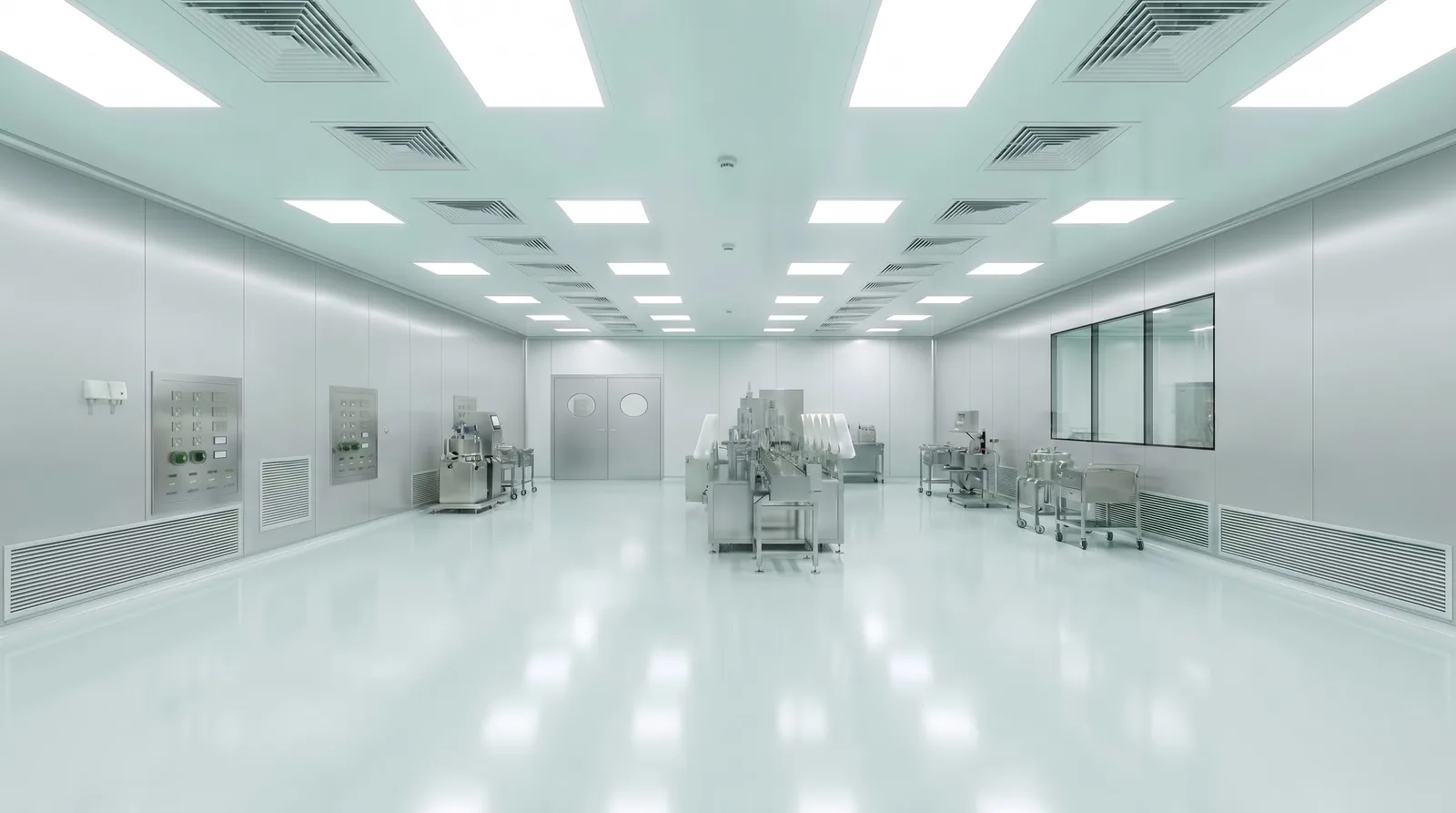
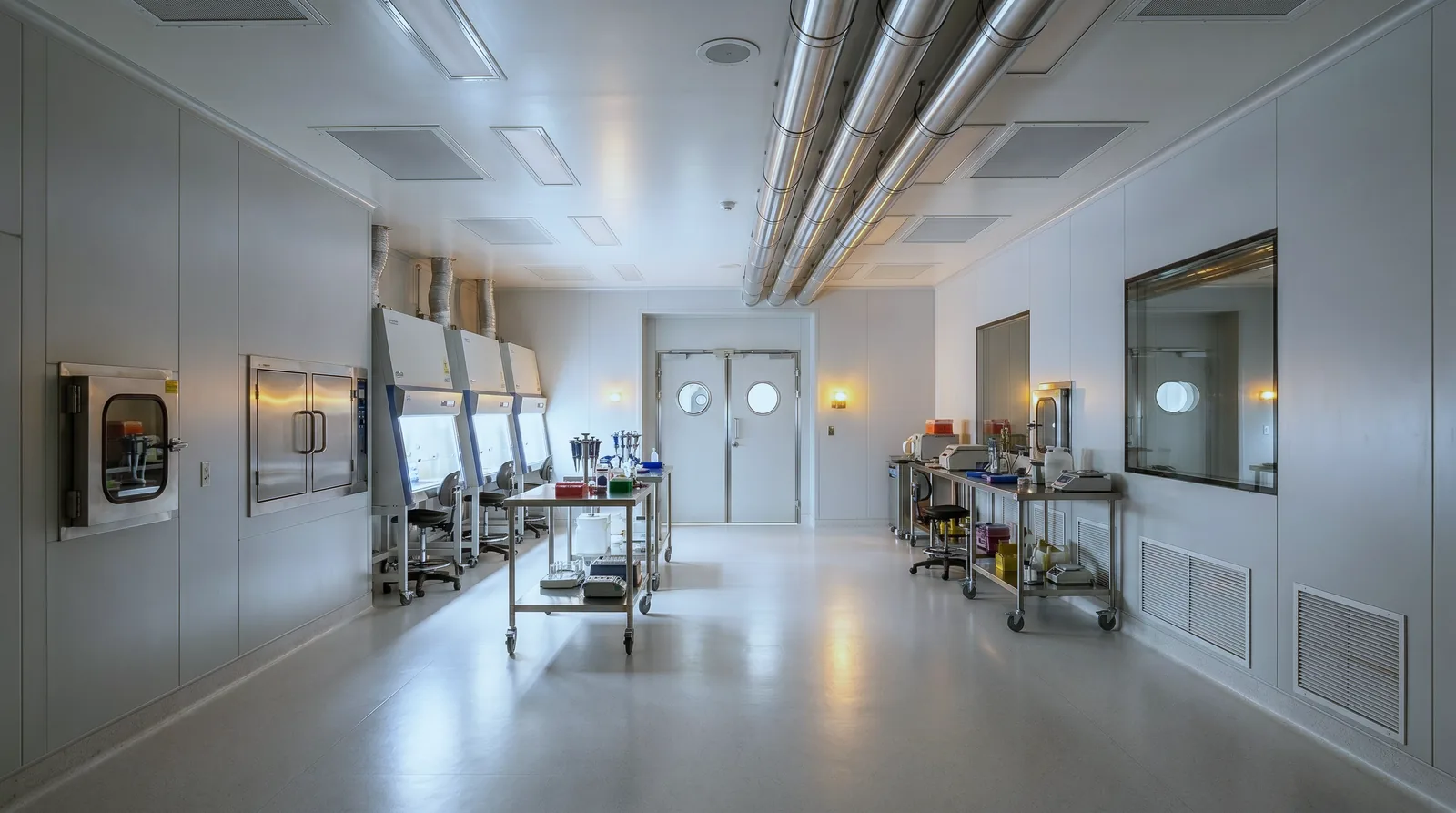
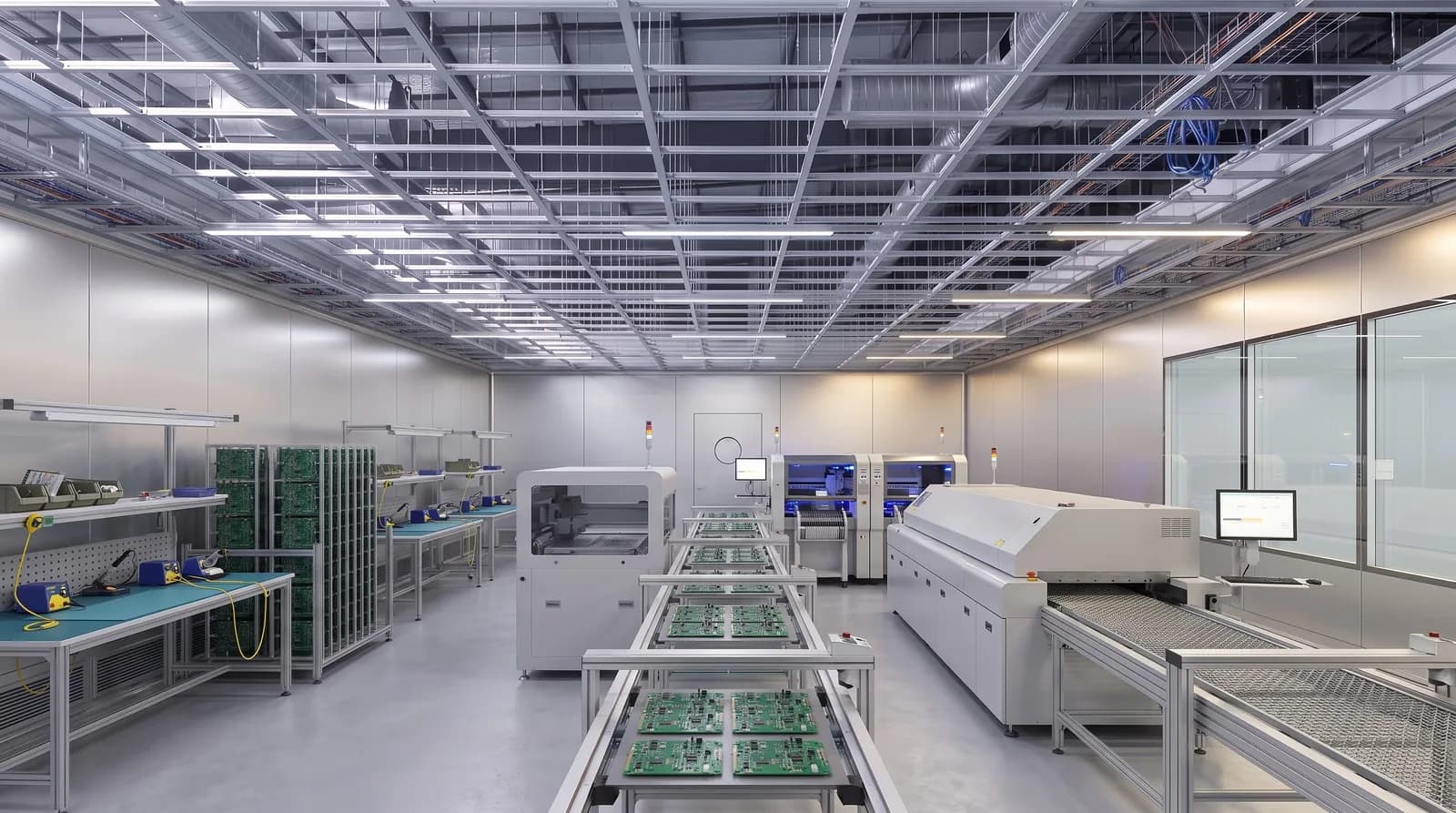
- Microbiology and cell culturePlate pouring, sub-culturing and media prep. Clean product only: a biohazard needs a biosafety cabinet, not a LAF bench.
- Hospital and compounding pharmacyNon-hazardous sterile compounding, where the unit gives the preparation a particle-free pocket to happen inside.
Each setting has its own placement and good-practice rules. The laminar air flow applications and uses guide walks through each one in depth, so we don't repeat it all here.
How Fabtech approaches laminar, unidirectional airflow
Fabtech Cleanrooms is a cleanroom and lab-engineering manufacturer that designs, builds and validates controlled environments across India. We manufacture laminar air flow units in-house, both horizontal and vertical. They ship as standalone benches and cabinets, and they go into turnkey cleanroom projects as HEPA and FFU ceilings.
Unidirectional airflow is not a side product here. It is how a cleanroom hits its grade. Whether the job is one LAF bench or a filter ceiling over a Grade A process, the filter face, blower and clearances are sized so the sheet stays even. The particle count then holds under real room conditions, not just on paper.
Fabtech has delivered HEPA-filtered, classified cleanrooms for pharma, biotech and research clients across India: the unidirectional-airflow and contamination-control engineering a LAF zone depends on.
Named laminar-airflow project references, with scope, ISO class and area, are shared on request.
Turnkey cleanroom solutions Cleanroom HVAC systems All cleanroom equipment
- Ajanta PharmaOSD facility, Aurangabad
- DesanoPharma cleanroom, Bangalore
- BARCResearch and hospital cleanrooms
- PGICH NoidaBSL-3 facility
- ASMC ShahjahanpurBSL-3 facility
FIG. 08The room around the bench. An air handling unit holds the background cleanroom at its class, and the laminar air flow unit is the still cleaner pocket inside it. Tile the ceiling with HEPA or FFU modules instead and the whole area becomes unidirectional, which is where a bench stops being equipment and becomes cleanroom design.
Laminar air flow, common questions
Laminar air flow delivers filtered air across a work zone in a smooth, one-directional sheet. Particles shed by the operator, tools or process are swept off the work instead of settling on it. The result is a small, reliably clean zone that protects the product from airborne contamination.
The purpose of a laminar air flow (LAF) unit is to give contamination-sensitive work a reliably particle-free pocket of air to happen inside. Think sterile dispensing, culture work or electronics assembly. It protects the product or sample; it does not protect the operator.
They are not alternatives. HEPA is the filter that removes the particles. LAF is the airflow pattern that delivers the filtered air in a smooth, unidirectional sheet. A laminar air flow unit uses a HEPA filter. HEPA cleans the air; laminar flow controls where it goes.
No. A LAF unit protects the product with clean air but gives the operator no protection: it blows work-zone air toward the face. A biosafety cabinet protects the operator, product and environment from hazardous biological material. Choose by what you need to protect.
Most units use grade H13 or H14 filters. H13 removes 99.95% of particles at the most-penetrating size; H14 removes 99.995%. They are the two HEPA grades under EN 1822, the European filter standard. Air crosses the work at 0.45 m/s (90 ft/min), the nominal design set-point.
A correctly functioning LAF work zone meets ISO Class 5 of ISO 14644-1. In European GMP terms that is Grade A, the grade for sterile operations. It also matches the legacy Class 100 rating of Federal Standard 209E.
They differ only in airflow direction. Horizontal units blow clean air toward the operator; vertical units blow it downward onto the work. Which fits depends on your process. The horizontal and vertical pages cover the trade-offs, sizing and validation in full.
The modern laminar-flow cleanroom is generally credited to the American physicist Willis Whitfield. He developed the unidirectional-flow cleanroom at Sandia National Laboratories in 1962. That design made today's HEPA-swept clean zones possible.
Yes. Fabtech manufactures laminar air flow units in-house, in horizontal and vertical formats. We supply them as standalone benches and cabinets, and we integrate them into turnkey cleanroom projects as HEPA and FFU ceilings. Our team can advise on specifying one for your facility.
Three checks prove it. Filter integrity is tested with a PAO/DOP aerosol challenge. Particle counts confirm the zone holds its class. Airflow velocity and uniformity are measured across the filter face. The tests repeat periodically, after each filter change, and sit in the formal qualification file for regulated work.
Tell us about your clean zone
Share the process, the bench layout and the class you have to hold. Our engineers come back with a sized laminar unit or a HEPA ceiling, and a comparable project.