

Operator protection, engineered
Fume hoods
A fume hood is a ventilated enclosure that pulls air away from the person working at it, so vapours, gases and dust are exhausted instead of breathed in. It protects you, never your sample, and getting that backwards puts someone at risk. Fabtech specifies, supplies, installs and tests fume hoods for Indian labs, from the same team that has delivered 2,000+ controlled environments since 2004 and stays accountable for each one.
- ASHRAE 110
- EN 14175
- ANSI/AIHA Z9.5
- SEFA 1
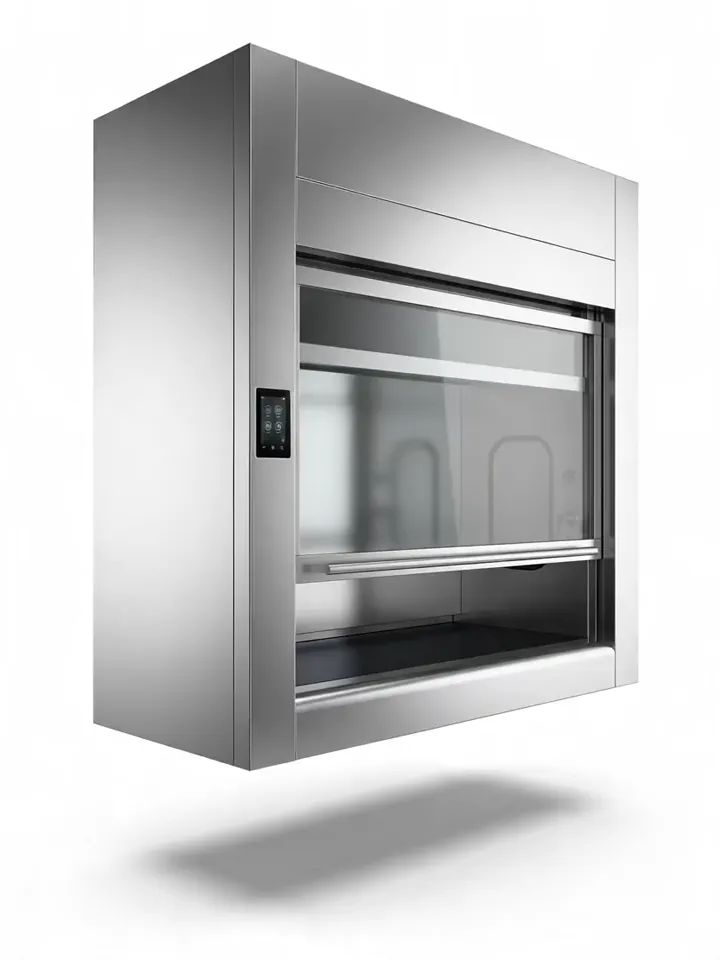
FIG. 01Fume hood, illustrative render. Construction options are confirmed per project.
What a fume hood is
A fume hood is a ventilated enclosure that continuously draws air away from the person working at it. Harmful vapours, gases, dust and fumes are carried off and exhausted instead of breathed in.
You work with the hazardous material inside the hood, behind a movable glass sash. That inward airflow keeps the fumes on the far side of the opening from you.
In British usage the same enclosure is a fume cupboard. "Fume chamber" is another name for it.
Fix one thing in your mind before anything else: the direction of the protection. A fume hood guards the operator, not the work. That matters, because the machine that does the opposite job looks almost identical. The next section tells them apart.
Fume hood vs laminar flow vs biosafety cabinet
These three enclosures look alike and protect completely different things. Pick the wrong one and you expose either the operator or the product. It is the most common, and most dangerous, mix-up in lab equipment.
| Enclosure | Protects | Airflow direction | Right for | Wrong for |
|---|---|---|---|---|
| Fume hoodTHIS PAGE | The operator | Room air pulled in across the sash, exhausted away | Toxic / corrosive / flammable chemical fumes | Keeping a sample clean (it doesn't) |
| Laminar flow hood | The product / sample | Clean HEPA air blown out over the work, toward you | Particle-sensitive work (sterile prep, electronics) | Hazardous chemicals (it blows fumes at you) |
| Biosafety cabinet | Operator + product + environment | HEPA-filtered downflow + inward containment | Biohazards (live cultures, infectious agents) | Significant volatile/flammable chemicals (most BSCs aren't rated for them) |
FIG. 02The rule of thumb is short. Chemical hazard, fume hood. Protect the product, laminar flow hood. Biological hazard, biosafety cabinet.
A fume hood and a laminar flow hood are near-opposites. One pushes clean air out over the work. The other pulls room air in and away. They are never interchangeable.
A standard fume hood also does nothing to keep your sample sterile. HEPA filtration captures particles only, never gas or vapour. So a "HEPA fume hood" does not exist for chemical fumes. Vapour capture is the job of activated carbon, which is the ductless story below.
How a fume hood works
At heart, a fume hood is one controlled, one-way airstream. Five things do that job as a single system, and a fan on its own is not one of them.
Fume hood: air pulled in, past you
Room air crosses the sash plane inward at about 0.3 to 0.5 m/s and leaves via the exhaust. The fumes stay on the far side of the opening.
Near-identical cabinets, opposite airstreams
Laminar flow: clean air blown out, at you
HEPA-filtered air washes over the work toward the operator. The product is protected. You are not, so it is never for hazardous chemicals.
FIG. 03The direction of protection. A fume hood pulls room air in across the sash plane and exhausts it, so the person at the opening stays upstream of the fumes. The near-identical laminar flow unit blows clean air out over the work, at the person. The arrowheads carry the directions even with motion off.
- 01
The sash, the containment opening
You reach in under a vertical or horizontal glass sash. The gap the sash leaves is where room air is pulled in. Lowering the sash shields you and raises the inward air speed at once.
- 02
Face velocity, the core safety number
The speed of that inward air across the sash opening is the face velocity. Too low and fumes roll back out at you. Too high, and turbulence at the sash can pull contamination toward you instead. The figures sit in the table below.
- 03
Baffle and capture
Air sweeps over the material and is pulled to the back of the hood through a slotted baffle. The baffle spreads the extraction from top to bottom. Fumes that rise when warm and fumes that sink when heavy are both caught.
- 04
Exhaust, the ducted route
A ducted hood sends the contaminated air through a blower and duct to a safe discharge point outside. It dilutes and discharges the vapours. It does not filter them.
- 05
Exhaust, the ductless route
A ductless hood passes the air through an activated-carbon filter that adsorbs the chemical vapours, behind a HEPA pre-filter for particulates. Cleaned air then returns to the room. That is safe only for known, filter-compatible chemistry.
- Face velocity
- Inward air speed across the sash opening
- Working band, industry practice
- ~0.3-0.5 m/s (about 60-100 fpm)
- Common design target
- ~0.5 m/s / 100 fpm
- The practice those figures follow
- ANSI/AIHA Z9.5, ASHRAE 110
Which exhaust route you need is a real engineering decision, not a preference. The types below sort it out.
A front airflow monitor / alarm shows whether the hood is inside its safe range. It warns you the moment face velocity drops.
The main types of fume hood
Here's the map. Each type below has its own page with the full detail.
Two specialised cousins you may meet. A walk-in hood takes tall apparatus. A downflow bench handles powders. Both are scoped on request.
Which fume hood do you need?
A fast way to narrow it down before you open the detailed pages.
| Your situation | Start with |
|---|---|
| Toxic / corrosive / flammable chemical fumes, ducting available | Chemical (ducted) fume hood |
| Known, low-volume chemistry; no ducting / need mobility | Ductless fume hood |
| Corrosive acids (HCl, H2SO4), or perchloric work | Acid / perchloric wash-down variant (chemical page) |
| Specifying / buying for an Indian lab fit-out | Laboratory fume hood |
| The hazard is biological, not chemical | Biosafety cabinet (not a fume hood) |
| You need to protect the product, not the operator | Laminar flow hood (not a fume hood) |
FIG. 04Six situations, and the page each one starts on.
Two of those rows point away from this page on purpose. If the hazard is biological, or if the thing you are protecting is the product, a fume hood is the wrong machine and no spec will fix that.
Anatomy of a fume hood, the parts that make it contain
The containment is the sum of these parts, not the cabinet alone.
FIG. 05Fume hood, side section. Numbers match the parts list.
- 1
Sash
The movable front screen, vertical, horizontal or combination, in toughened or laminated safety glass. The working aperture it leaves is what sets face velocity. Lower it when you are not reaching in.
- 2
Airfoil and sill
The shaped lower edge that smooths the inrush of air. It stops a dead spot forming at the work surface.
- 3
Baffle
The slotted rear panel that distributes extraction top to bottom, so capture stays even.
- 4
Liner and worktop
Chosen for the chemistry. Epoxy-coated steel suits general use and polypropylene (PP) suits acids, with phenolic-resin or ceramic worktops where they are called for.
- 5
Blower / exhaust fan
It moves the air. It is sized with the ductwork and the make-up air, never in isolation.
- 6
Airflow monitor / alarm
It confirms the hood is containing, and warns on low face velocity.
| Parameter | What it is | Typical basis |
|---|---|---|
| Face velocity | Inward air speed at the sash | ~0.3-0.5 m/s (~60-100 fpm) |
| Sash type | Vertical / horizontal / combination | By reach + face-velocity control |
| Construction | Liner, worktop, sash material | Matched to chemistry |
| Exhaust mode | Ducted vs ductless (carbon) | By chemistry, volume, duct availability |
| Monitoring | Airflow monitor / alarm | Fitted as standard |
FIG. 06Fume hood anatomy and the specification parameters each part sets.
Standards a fume hood is judged against
A fume hood earns its keep on one thing. Does it actually keep the fumes off the person at the sash? That is what these standards measure. They test containment performance, not cleanroom particle class. Here is the set that applies.
- ASHRAE 110The tracer-gas containment-performance test, and the proof that a hood contains. It is rated as-manufactured, as-installed and as-used.
- EN 14175The European multi-part standard for fume cupboards, covering type test, on-site test and containment. It is often referenced on Indian projects.
- ANSI/AIHA Z9.5Laboratory ventilation: face velocity, exhaust and make-up air.
- SEFA 1Recommended practice for how a laboratory fume hood is built and how it has to perform.
- Periodic testingPeriodic face-velocity testing, plus airflow-monitor checks. This is the routine proof that it still contains.
The India context that actually drives the design
A fume hood's exhaust discharges to atmosphere. So the Indian rule that bites is the CPCB (Central Pollution Control Board) discharge and emission expectation for what leaves the stack. That can decide whether you need a scrubber on the exhaust.
Where the hood sits inside a classified pharma or QC lab, the room around it is designed to ISO 14644. The relevant EU-GMP Annex 1 expectations apply to that room as well. So does India's Schedule M. Those rules classify the room, not the hood.
There is no single Indian Standard that is "the" fume-hood code. Any specific IS or BIS reference is confirmed per project. We anchor India compliance on CPCB plus the room context above, not on a phantom code.
Where fume hoods are used
Fume hoods belong wherever people handle volatile or hazardous substances.
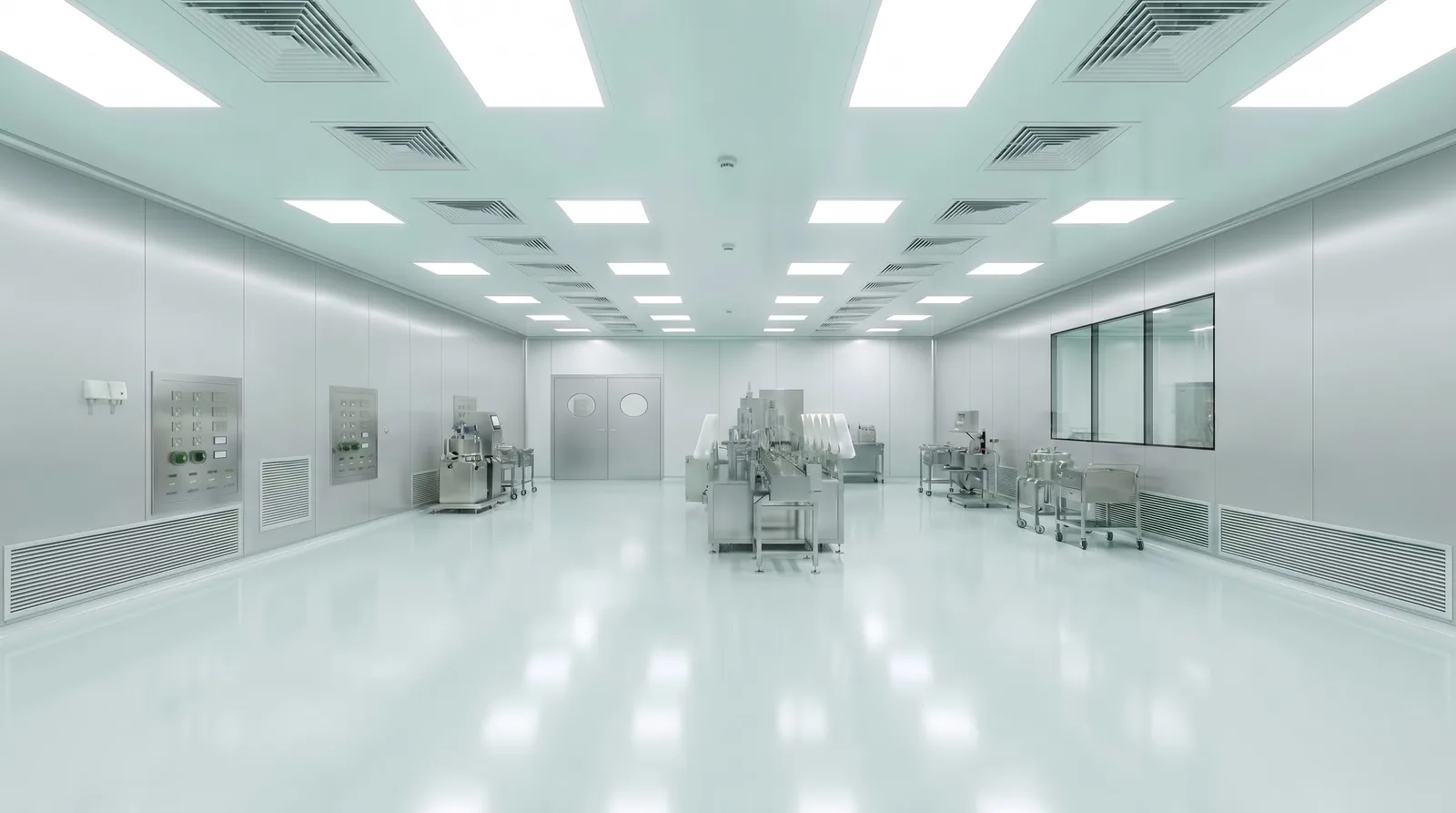
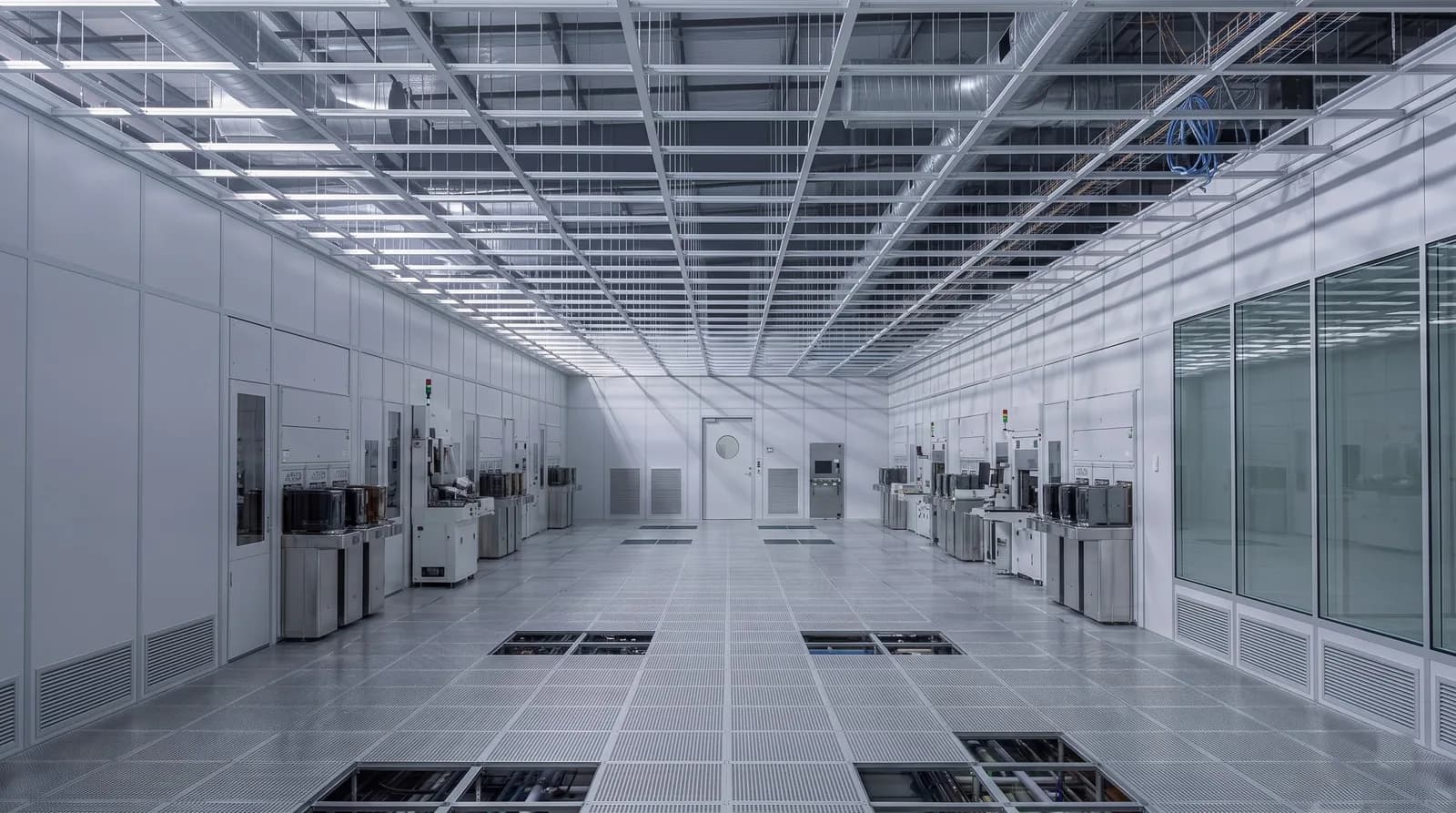
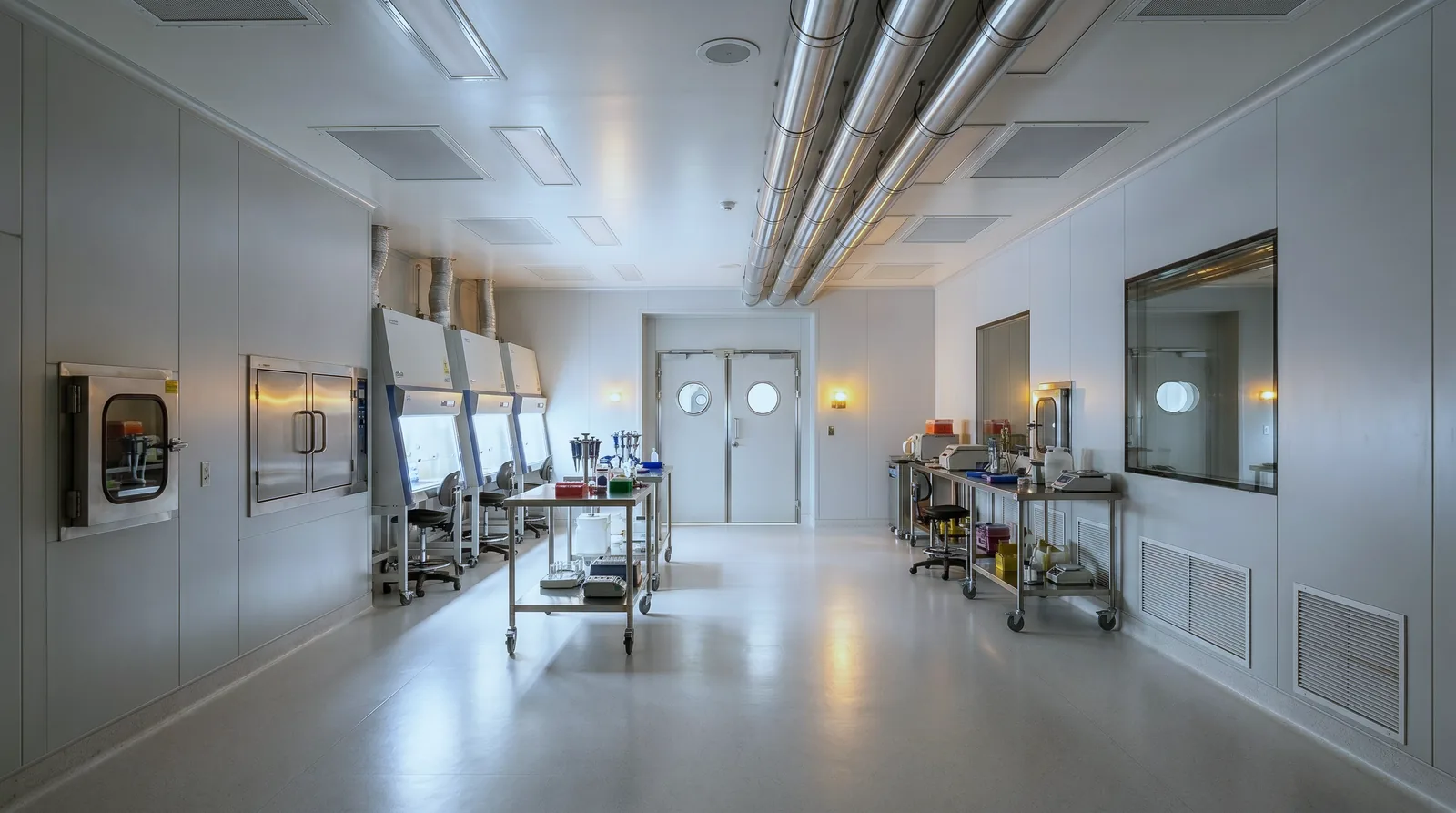
- Academic & research institutionsTeaching and research chemistry.
- Petrochemical, materials & forensic testingDigestion, extraction and volatile reagents.
Inside a pharmaceutical or research cleanroom or controlled lab, the hood is one element of a wider ventilation and contamination-control design. Its exhaust, its make-up air and the room pressure are planned together. That is where a cleanroom-engineering approach earns its keep, which is the next section.
Installing a fume hood: why it's a system, not a box
The most expensive fume-hood mistake is treating it as furniture. A hood only contains if the lab can replace the air it throws out.
Add a hood without supplying matching make-up air and the room goes negative. The inward face velocity drops. The hood quietly stops containing, and that is the failure you cannot see. So the exhaust fan, the ductwork, the make-up air and the lab's room-pressure cascade are sized as one system.
This is the engineering view a cleanroom and lab manufacturer brings, and a catalogue cannot.
FIG. 07The system a ducted hood depends on. Conditioned make-up air replaces every cubic metre the hood exhausts, the room pressure cascade stays intact, and the stack discharges outside within CPCB limits. Skip any leg and the hood quietly stops containing.
Make-up air
Conditioned replacement air. It is often a bigger line item than the hood itself, and the one most price lists ignore.
Ducting and discharge
Routed to a safe outside discharge, clear of intakes. A scrubber goes in where CPCB discharge limits require it.
Room pressure
The hood's exhaust has to fit the lab's pressure regime rather than fight it. Negative for containment areas, and the cascade for a GMP suite.
Keeping a fume hood safe: testing & maintenance
A hood is a safety device. Its performance is verified on a schedule, never assumed.
Face-velocity testing
Periodic measurement against the design figure. It is the routine "is it still containing?" check.
ASHRAE 110 re-test
The tracer-gas containment check, run after installation or after a major change.
Filter management
Carbon media saturate and then break through. They need monitoring and a scheduled change-out matched to the chemistry. Ductless is unsuitable for high-volume or incompatible chemistry.
Monitor / alarm checks
The airflow alarm is itself verified.
AMC / FAT
Where Fabtech supplies the equipment, equipment-level maintenance and factory-acceptance testing apply. Both are equipment-only.
Fume hoods and lab ventilation, the Fabtech way
Fabtech specifies, supplies, installs and validates the fume hood your lab needs. It is matched to your chemistry and to your room, as a standalone unit or built into a turnkey lab or cleanroom.
The engineering that decides whether a hood is any good is the part Fabtech owns end to end. Construction is matched to the chemistry. The exhaust and the make-up air are sized so the hood genuinely contains. What leaves the stack stays inside CPCB limits.
The rest of it is knowing when the job needs ducted, ductless, acid or perchloric duty. The hood is then specified to the room, not picked from a list. Where the hazard is biological rather than chemical, the right enclosure is the biosafety cabinet, which Fabtech builds in-house.
Behind that sits Fabtech Cleanrooms. It is a cleanroom and lab-engineering manufacturer that designs, builds and validates controlled environments across India.
Fabtech has delivered controlled labs and cleanrooms for pharma and research clients across India. They include Ajanta Pharma, Desano and BARC, plus BSL-3 facilities at PGICH Noida and ASMC Shahjahanpur. That is the lab-ventilation and contamination-control engineering a fume hood gets installed within.
These are cleanroom / lab-engineering projects, cited as capability evidence, not a claim that each was a fume-hood supply. A named fume-hood reference is available on request.
See the proven work on laminar airflow Turnkey cleanroom & lab solutions
- Ajanta PharmaOSD cleanroom, Aurangabad
- Desano PharmaPharma, Bangalore
- BARCHospital cleanrooms
- PGICH NoidaBSL-3 facility
- ASMC ShahjahanpurBSL-3 facility
Not sure whether your job calls for a fume hood or an in-house biosafety cabinet, ducted or ductless? That is exactly the call our engineers will walk through with you. No obligation, just the honest answer for your chemistry and your room.
Fume hoods, common questions
A fume hood is used for working safely with substances that give off harmful vapours, gases, dust or fumes. It draws air away from the operator and exhausts or filters it. The fumes are not inhaled. It protects the person, not the sample.
Use a fume hood whenever you handle toxic, corrosive, flammable or strongly odorous chemicals, or anything that releases hazardous airborne contamination. The test is simple. If the risk is to the people in the room rather than to the cleanliness of the product, you need a fume hood.
"Fume chamber", like "fume cupboard", is another name for a fume hood. It is a ventilated enclosure that captures and removes hazardous fumes at the point of use. That keeps them out of the operator's breathing zone.
No. A fume hood is an engineering control, so it removes the hazard at source. PPE such as gloves, goggles and a lab coat is worn on the body as a second line of protection. Good practice uses the engineering control first, and PPE as well, not instead.
A fume hood pulls air in and exhausts it, protecting the operator from chemical fumes. A laminar flow hood pushes clean HEPA air out over the work, protecting the product from particles. It must never be used for hazardous chemicals. They are near-opposites.
The main types are ducted (conventional) hoods that exhaust outside, ductless (recirculating) hoods that carbon-filter and return air to the room, and chemical hoods rated for corrosive or toxic duty. The category also covers acid/PP, perchloric wash-down and walk-in variants for specific needs.
A ducted hood does. A ductless (recirculating) hood does not. It filters the air through activated carbon and returns it to the room. Ductless suits known, low-volume, filter-compatible chemistry. Heavy or varied chemistry should be ducted out.
A fume hood is quoted per requirement, not sold at one list price. The cost is driven by type, size, construction, ducting, make-up air and validation.
Tell us about your lab
Share your chemistry, your lab layout and whether ducting is available. Our engineers respond with a scoped recommendation, not a brochure.