

Key Components of HVAC Systems and Their Functions
The key components of an HVAC system, from the AHU and HEPA filtration to coils, blowers and ductwork, and how each keeps a cleanroom controlled.
7 min read · a working guide by the Fabtech Cleanrooms engineering team · first published 2025-04-29
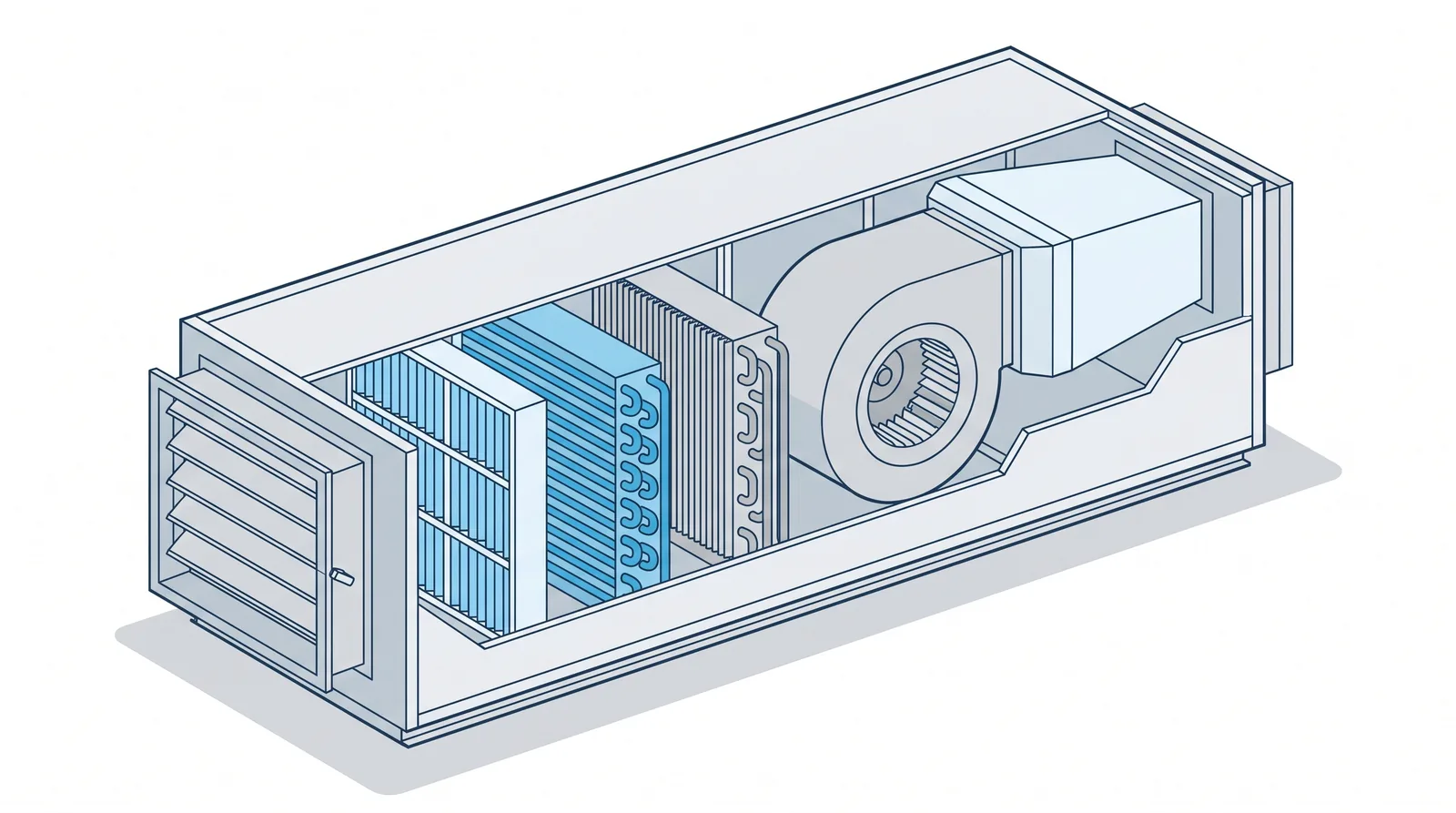
The guide
Heating, ventilation and air conditioning systems (HVAC) have become an indispensable part of modern infrastructure. By regulating temperature, humidity and air quality in enclosed spaces, HVAC ensures thermal comfort, controlled environments and energy efficiency, all of which matter for both human well-being and specialised industrial processes.
The effectiveness of an HVAC system, however, lies in the seamless integration of its components. This guide breaks down the essential elements of an HVAC system, their technical functions, and their significance in highly regulated environments such as pharmaceutical and biotech manufacturing.
So what are the key components of an HVAC system? It is not a single machine but a set of components that condition, move, filter and distribute air. Below are the eight that do the most work, what each one contributes in a controlled environment, and why the design of the whole system matters in regulated industries.
1. Air handling unit (AHU)
The air handling unit (AHU) is responsible for circulating conditioned air throughout the facility. It contains essential components such as blower fans, filters and heating or cooling coils. In most buildings it connects directly to the ductwork: it blows cooled or heated air into the space and then returns it into the system. The filters remove contaminants before the air is conditioned, and the dampers and mixing chambers regulate air intake and distribution.
In pharmaceutical cleanroom systems and biotech labs, AHUs are designed with HEPA filters for laminar airflow, alongside controlled ventilation strategies that prevent contamination and hold the cleanroom to its rated class.
2. Evaporator coil
Located within the furnace or air handler, the evaporator coil absorbs heat from the indoor air, cooling it before circulation. It connects to the condensing unit, which is filled with refrigerant gas. The unit pumps condensed liquid to the evaporator coil, where it evaporates back into gas and, in doing so, cools the air. The coils also keep humidity levels low, preventing the microbial growth that pharmaceutical and biotechnology environments cannot tolerate.
3. Heat exchanger
The heat exchanger transfers thermal energy between the air and one or more separate fluids (refrigerant or water). It enables efficient heating (furnaces, boilers, heat pumps) or cooling, and plays a vital role in process-specific temperature regulation, keeping the process stable. Its role extends beyond climate control: a well-specified heat exchanger contributes to energy conservation and thermal efficiency across industrial operations.
4. Blower motor and fan
The blower motor powers the fan, which draws unconditioned air into the system, pushes it through the heating or cooling components, and circulates the treated air throughout the facility. Modern HVAC systems use variable-speed blower motors that adjust airflow dynamically, optimising energy efficiency while maintaining consistent environmental conditions.
5. Heating mechanism
Unlike conventional HVAC systems that use combustion-based burners, pharmaceutical and high-technology facilities rely on steam, hot water or electric heating to maintain clean, contamination-free environments. Steam heating is widely used for its efficiency in providing uniform heat. Hot-water heating (hydronic systems) delivers gradual, consistent temperature control, which suits HVAC-controlled environments well.
For precision heating, electric resistance heaters are integrated into AHUs or ductwork, offering clean, combustion-free operation. These methods deliver the reliable, contamination-free heating that pharmaceutical and biotech facilities depend on.
6. Compressor and condenser coil
The compressor and condenser coil, typically located in the outdoor unit, handle cooling by releasing heat outdoors. The compressor compresses the refrigerant gas, raising its temperature. The condenser coil then releases that heat into the outdoor environment, converting the refrigerant back to liquid. High-efficiency compressors, such as scroll or screw compressors, are used in large industrial HVAC systems for better energy efficiency.
7. Ductwork system
The ductwork system distributes conditioned air throughout the facility, carrying heated or cooled air from the air handler to the vents. Cleanroom-grade ducting, made from airtight, corrosion-resistant materials, is controlled to regulate the heating or cooling of each space it serves while preventing contamination. Properly designed ducting ensures uniform air distribution and prevents hotspots in controlled environments such as pharmaceutical production and semiconductor manufacturing.
8. Air filtration and quality control
Before the air is conditioned, it passes through an air filter. This component removes particulates such as dust and pollen, keeping air circulation clean and protecting the HVAC system itself. Filtration is critical for indoor air quality (IAQ), particularly in pharmaceutical production, food processing and healthcare settings.
HEPA (high-efficiency particulate air) filters trap at least 99.97% of particles at the most penetrating particle size (around 0.3 microns), supporting ultra-clean environments. Modern HVAC systems layer in further air-purification technologies to optimise indoor air quality: UVGI (ultraviolet germicidal irradiation) systems neutralise airborne pathogens, and dehumidifiers and humidifiers control moisture levels to prevent microbial growth.
9. Why HVAC design matters in regulated industries
In industries where the production environment directly affects long-term health, every component that plays a critical or supporting role deserves attention. Today, HVAC is more than comfort. It is a clean-air system for industries where air quality affects product integrity, regulatory compliance and human safety.
In the pharmaceutical, biotech and semiconductor sectors, HVAC systems are designed for precise environmental control, energy efficiency and contamination prevention. They also contribute to a healthier workplace by ensuring clean, breathable air for personnel.
Fabtech Cleanrooms engineers HVAC systems for pharmaceutical, biotech, cleanroom and high-technology facilities as part of a turnkey scope, from air-system design through installation and validation. A deeper understanding of how each component works makes for better-informed decisions in project planning. If you are scoping the air system for a controlled environment, see our cleanroom HVAC and air-handling services to talk through your requirement.
Keep reading
More from hvac and validation
Guide · 10 min read
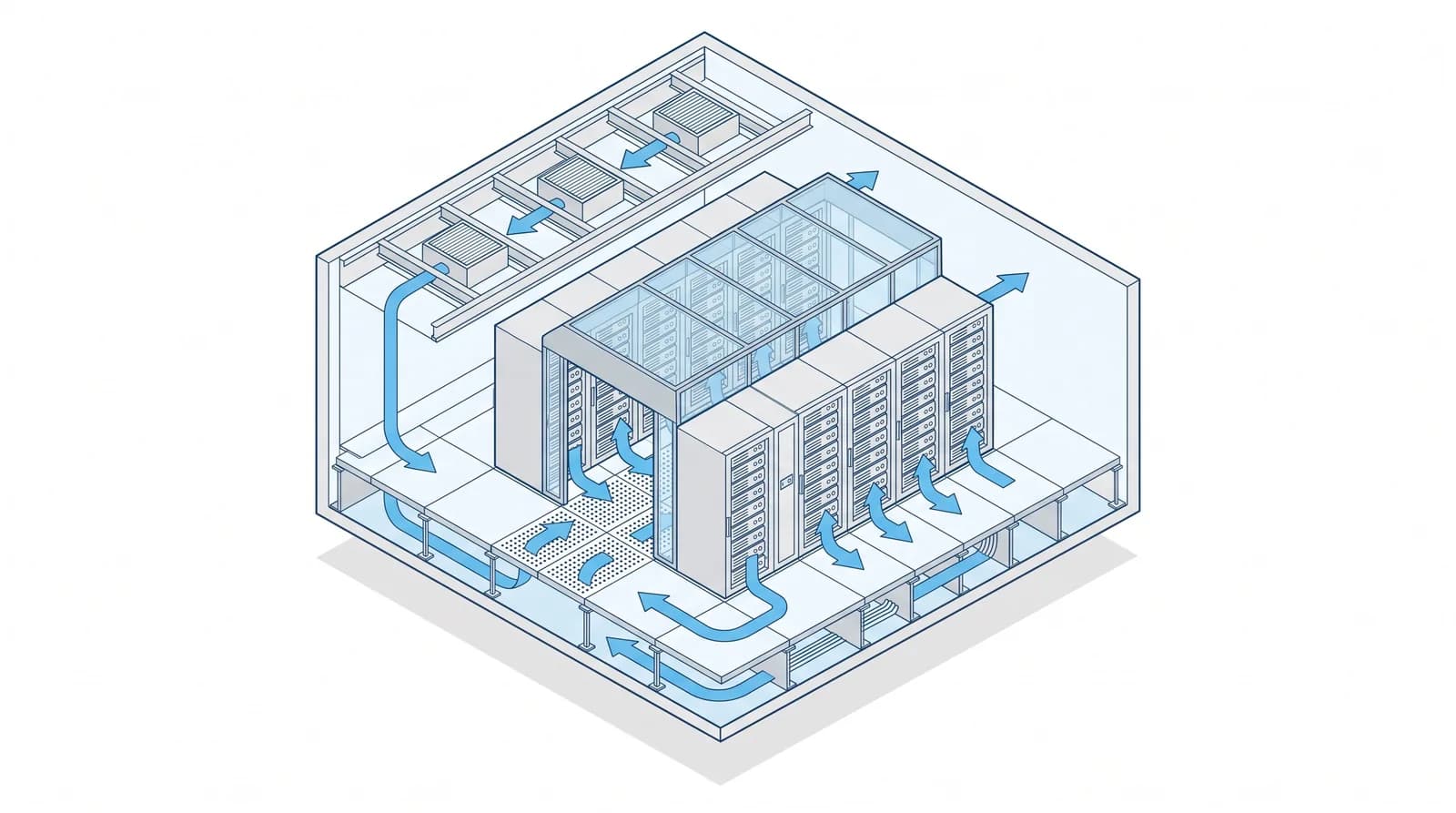
Airflow Design: How Cleanrooms for Data Centres Improve Server Performance
How cleanroom airflow design, HEPA/ULPA filtration and laminar airflow control heat, dust and cooling to lift data centre server performance.
Guide · 9 min read
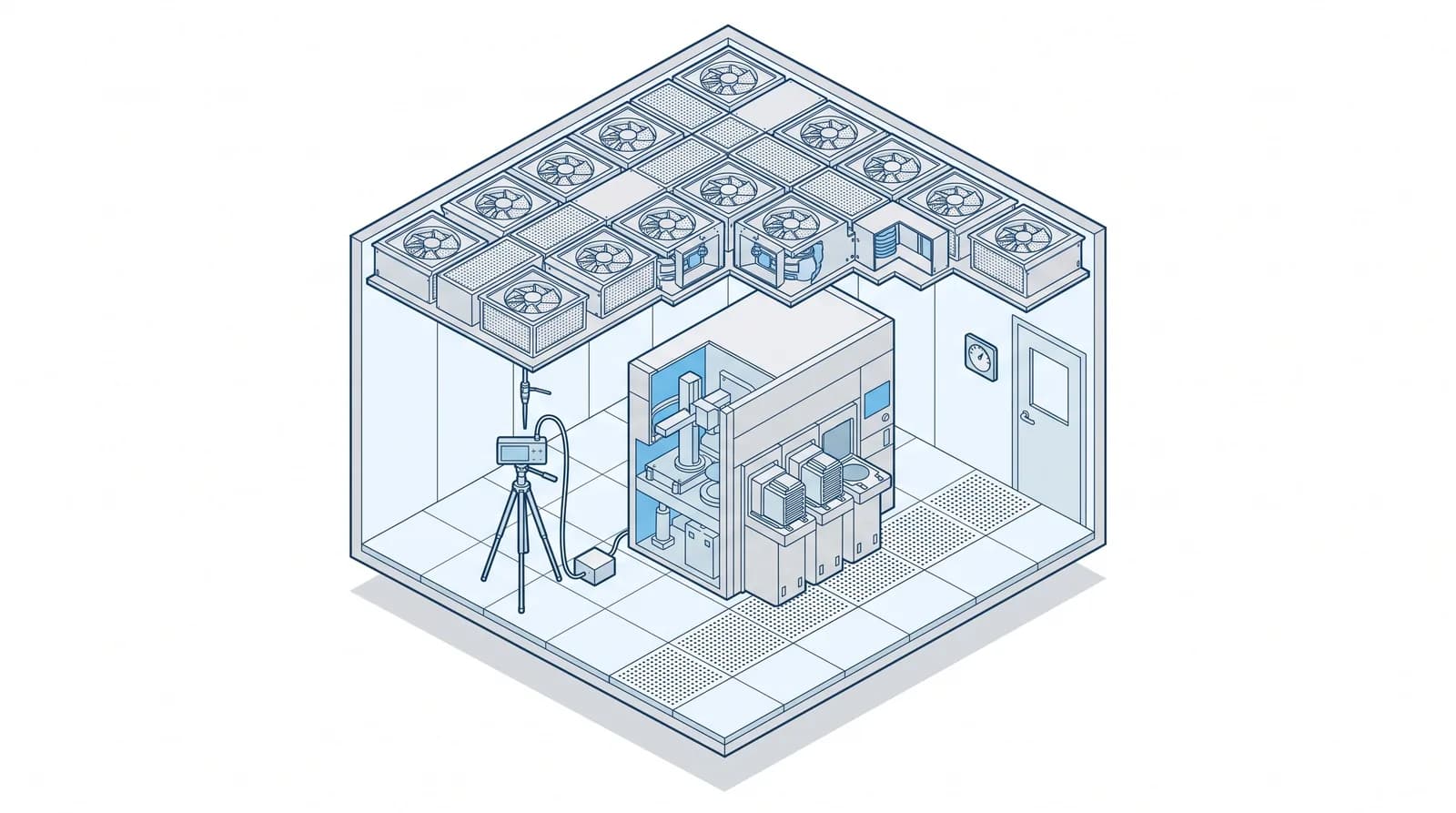
Cleanroom and HVAC Validation: The Invisible Backbone of Semiconductor Manufacturing
How cleanroom and HVAC validation, from DQ and IQ to OQ and PQ, protects semiconductor manufacturing from particle, humidity and ESD defects.
Guide · 7 min read
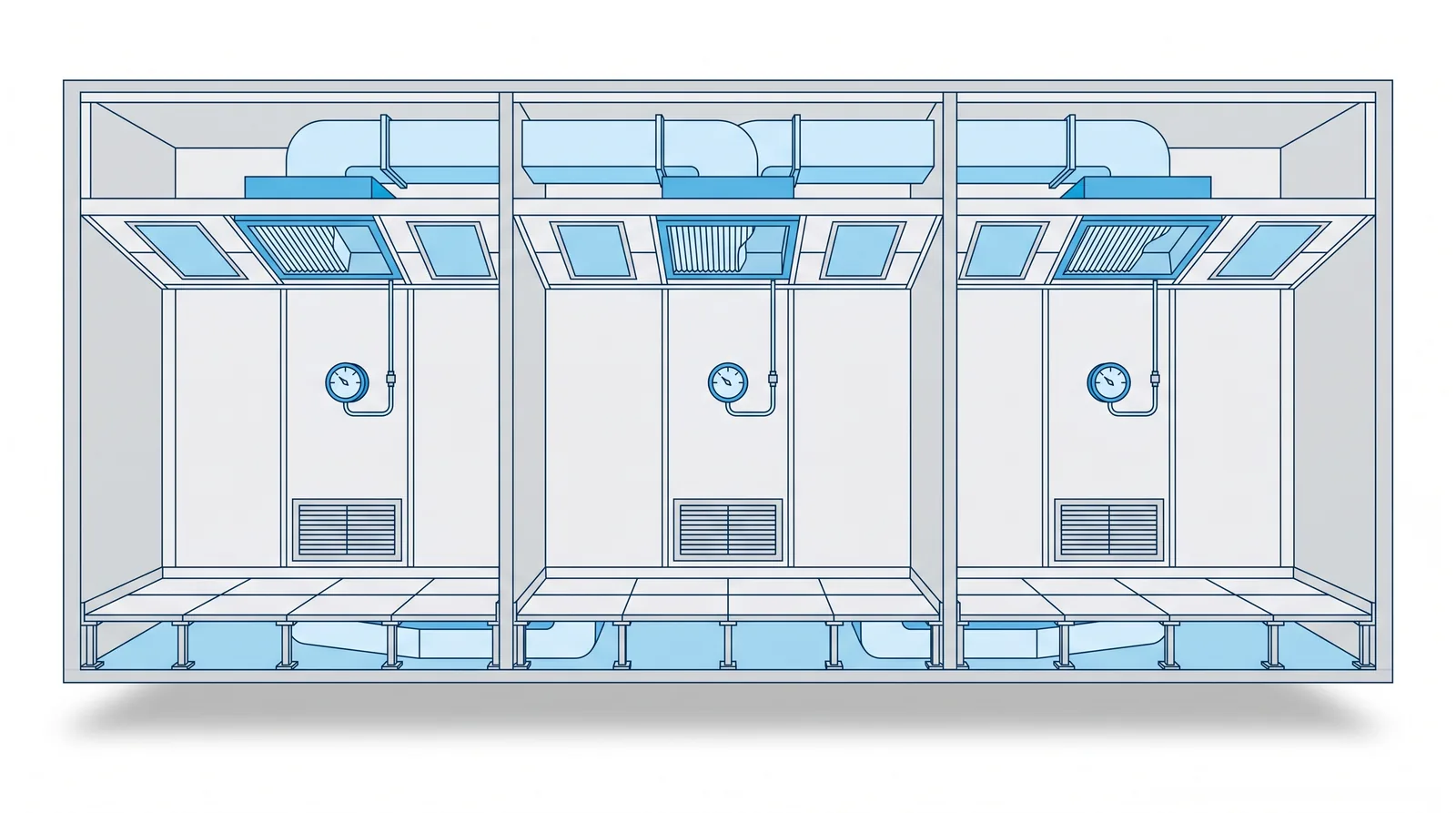
Consistency: The Quiet Discipline Behind Cleanroom Performance
How consistency in cleanroom design, HVAC, monitoring and IQ/OQ/PQ validation keeps environmental control stable, batch after batch, in manufacturing.
Ready to move from reading to scoping? Our turnkey cleanroom services cover design, construction and validated handover as one accountable scope.
Talk to the engineers