

Cleanroom and HVAC Validation: The Invisible Backbone of Semiconductor Manufacturing
How cleanroom and HVAC validation, from DQ and IQ to OQ and PQ, protects semiconductor manufacturing from particle, humidity and ESD defects.
9 min read · a working guide by the Fabtech Cleanrooms engineering team · first published 2025-07-22
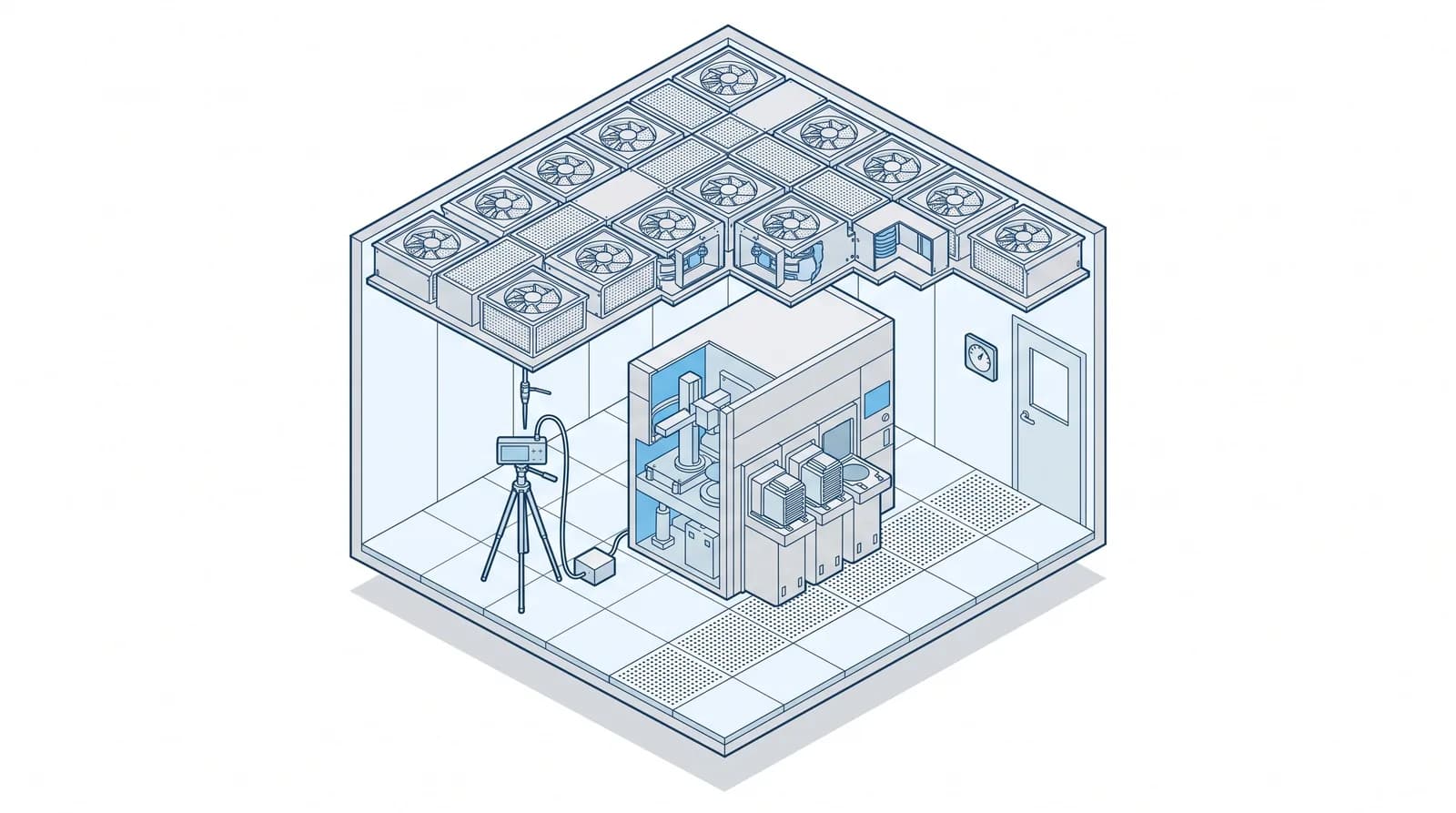
The guide
Smooth on the surface, yet deeply complex beneath. That is the nature of semiconductor manufacturing. It is this complexity that makes our smartphones smart enough to navigate us to all corners of the world, and gives our computers, along with countless other devices, the power to run billions of operations in seconds.
The seamless functioning of these devices depends not only on the precise engineering of their components but also on the air they breathe and the environment in which they are built. That level of environmental control is only possible through rigorous cleanroom and HVAC validation.
But why is validation so important? Because the tiniest lapse can cause the biggest failure. Particles invisible to the naked eye can damage microchips.
01
Why cleanroom and HVAC validation matters in semiconductor manufacturing
1. Particle control
Semiconductor fabrication requires environments with extremely low levels of airborne particles to prevent defects in microchips. Cleanroom and HVAC validation confirms that the air filtration systems (HEPA and ULPA filters) are functioning correctly and that the airflow is appropriate for maintaining the required cleanliness levels. Validation confirms the cleanroom system meets its ISO classification (such as ISO Class 5 or ISO Class 6) and maintains particle-controlled conditions.
2. Temperature and humidity stability
Semiconductor processes demand tight control over temperature and humidity. Slight changes in either can lead to wafer defects, material warping, or process failures. HVAC validation confirms that these parameters remain within the acceptable range, around the clock, every day of the year.
3. Consistent product quality
By maintaining a stable and controlled environment, validation helps ensure that every chip produced meets its required specifications. The risk of defective chips is significantly reduced, which supports yield and improves production efficiency.
4. Electrostatic discharge (ESD) risk reduction
Electrostatic discharge (ESD) is a silent yet serious threat to semiconductor components. Validated HVAC systems help control relative humidity, which in turn reduces the risk of electrostatic discharge and protects both the product and the process.
5. Chemical and molecular contamination control
Besides particles, volatile organic compounds (VOCs) and chemical contaminants can interfere with photolithography and etching processes. Cleanroom validation confirms that filtration and air exchange rates meet the required standards.
6. Regulatory compliance
Cleanrooms for the semiconductor industry are often classified according to ISO standards (for example, ISO 14644) and SEMI guidelines that specify the allowable levels of airborne particles, ventilation and safe working conditions. Validation demonstrates compliance with these standards and confirms that cleanrooms are safe for both products and people.
7. Yield optimisation
By minimising contamination and maintaining process stability, validation directly affects the yield of semiconductor manufacturing, leading to higher production efficiency and less waste. Improved yield can translate into lower production costs for semiconductor manufacturers, which is why a well-built, validated cleanroom is a capital investment rather than a cost line.
8. Continuous monitoring and risk mitigation
Validation also includes verifying monitoring systems for pressure differentials, airflow patterns, and filtration performance. This supports real-time alerts and risk control in the event of a deviation.
02
What does the validation process look like?
Next, let us address an important question: what does the validation process actually involve?
1. Design qualification (DQ)
It begins with design qualification (DQ), which confirms that the proposed semiconductor cleanroom design and HVAC system meet user requirements and comply with the relevant industry standards. This stage involves reviewing technical designs, airflow layouts, and specifications to confirm suitability for sensitive semiconductor operations.
2. Installation qualification (IQ)
Here, the physical installation of equipment is verified. Each component, including HEPA filters, air-handling units, ducts, monitoring sensors, and control systems, is inspected for proper installation against the approved design. Equipment calibration and material certifications are checked so that every installed part supports contamination control.
3. Operational qualification (OQ)
This phase tests the HVAC and cleanroom systems under idle, non-production conditions. Key parameters such as airflow velocity, air changes per hour, pressure differentials, temperature, humidity, and particle counts are measured. These tests verify whether the cleanroom environment operates within the required limits. Additional assessments, such as HEPA filter integrity testing (DOP/PAO testing) and smoke studies, are performed to detect air leaks and confirm unidirectional airflow where required. The integrity test is repeated in the next phase, so that HEPA and ULPA filters are proven intact and leak-free and the airflow reaching the process stays clean.
4. Performance qualification (PQ)
This is the final phase, and the most critical. It evaluates the cleanroom's performance during actual production. This step confirms that the environment maintains compliance under real-world conditions, including the presence of personnel, equipment heat loads, and actual airflow and filtration behaviour. Monitoring systems are validated to confirm continuous performance tracking, and data is logged to confirm the facility can consistently meet its ISO classification without deviation.
5. Revalidation after changes and maintenance
In semiconductor manufacturing, any significant change, whether in equipment, layout, process parameters, or even routine maintenance of HVAC and cleanroom systems, calls for revalidation. This is critical to confirm that the integrity and performance of the controlled environment are not compromised. Revalidation involves re-executing the necessary steps of IQ, OQ, and PQ for the affected systems, reconfirming that all critical parameters are within specified limits. This proactive approach helps minimise contamination risks, maintain high yield, and support uninterrupted production.
A proper revalidation process includes identifying what changes have occurred, preparing a validation plan, performing the necessary assessments, documenting the outcomes, and obtaining formal approval. It is a structured safeguard for quality and compliance.
6. Documentation and release
The validation process involves comprehensive documentation. Every test, observation, and outcome is recorded in detail, along with any deviations and the corrective actions taken. Once validation is complete, the qualification dossier confirms that the cleanroom and its HVAC systems are compliant and ready for production.
Only after all parameters are verified and aligned with specifications is a cleanroom qualified and released for production. Revalidation is typically scheduled annually or semi-annually to accommodate changes and keep the facility aligned with the standards it was built to.
03
The invisible backbone
Cleanroom and HVAC validation is not a one-time activity but a continual commitment to precision. It is the invisible backbone of semiconductor manufacturing that supports innovation with control, enables reliability through consistency, and upholds quality through compliance.
At Fabtech, we treat validation as more than a checklist. It is an engineered discipline that reinforces the trust our clients place in us. Our approach means every clean-air solution we deliver is not just a compliant space, but a future-ready environment that supports the evolving demands of semiconductor technology.
Related reading: for how a modular build meets fab requirements, from panel engineering to HEPA and ULPA filtration, see our companion post on how modular cleanrooms satisfy semiconductor requirements.
If you are planning a validated cleanroom for chip fabrication or a related process, our engineers can scope the design, the target ISO class, and the DQ/IQ/OQ/PQ validation plan with you. Read how we approach controlled environments for the sector on our semiconductor cleanroom solutions page, and how the air system itself is engineered and balanced on our cleanroom HVAC page. To start a conversation, get in touch with our team.
Keep reading
More from hvac and validation
Guide · 10 min read
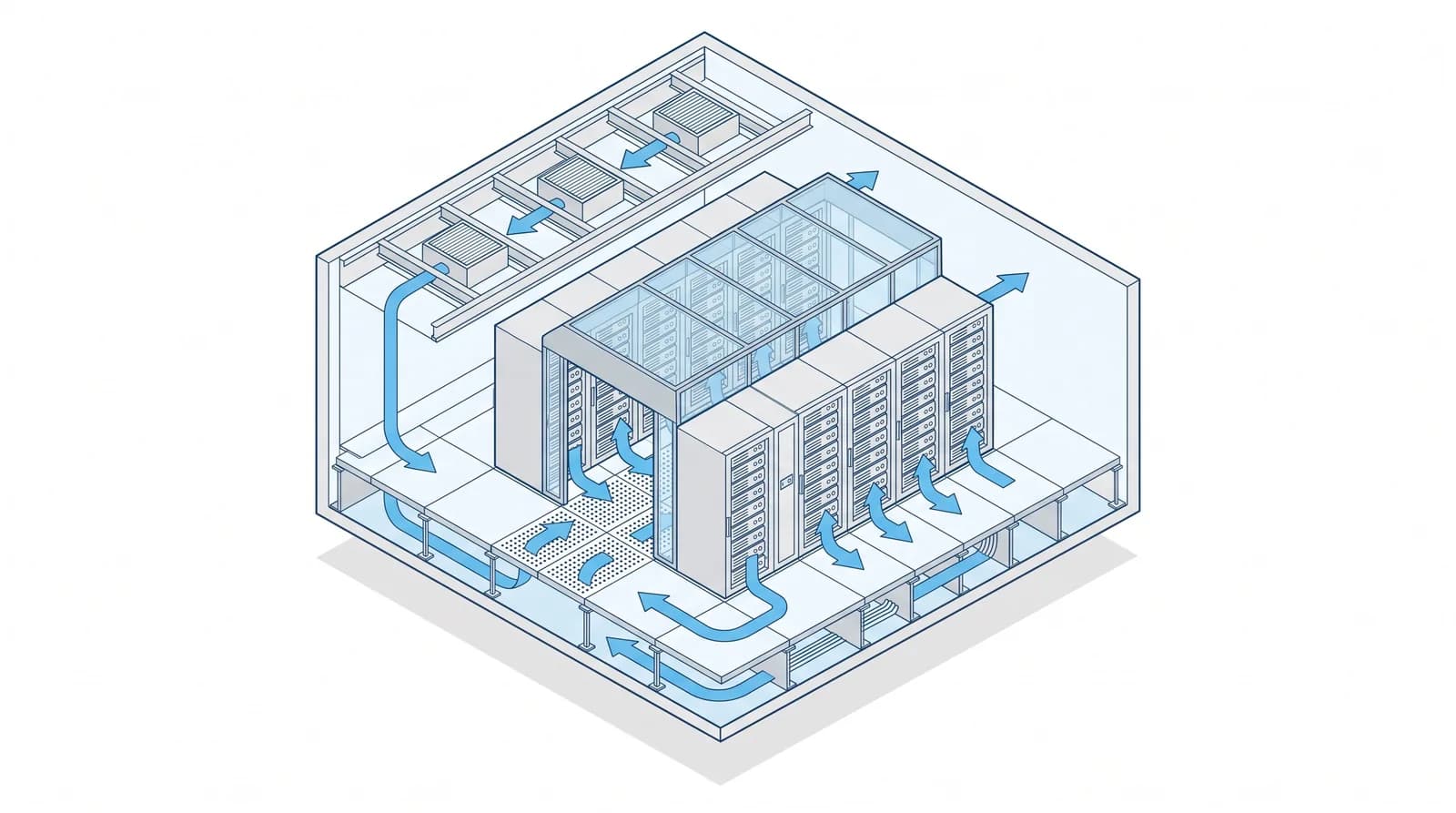
Airflow Design: How Cleanrooms for Data Centres Improve Server Performance
How cleanroom airflow design, HEPA/ULPA filtration and laminar airflow control heat, dust and cooling to lift data centre server performance.
Guide · 7 min read
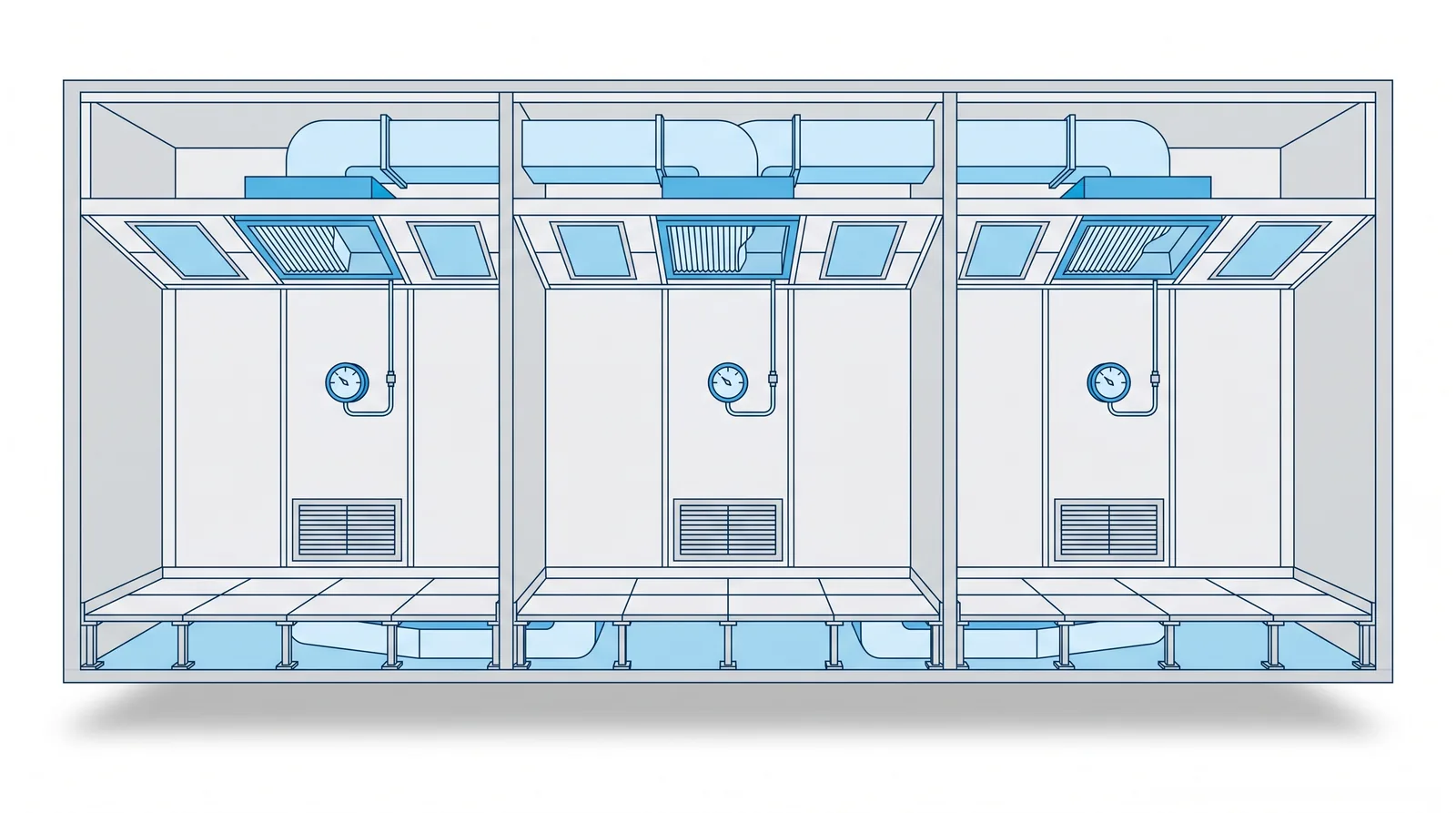
Consistency: The Quiet Discipline Behind Cleanroom Performance
How consistency in cleanroom design, HVAC, monitoring and IQ/OQ/PQ validation keeps environmental control stable, batch after batch, in manufacturing.
Guide · 7 min read
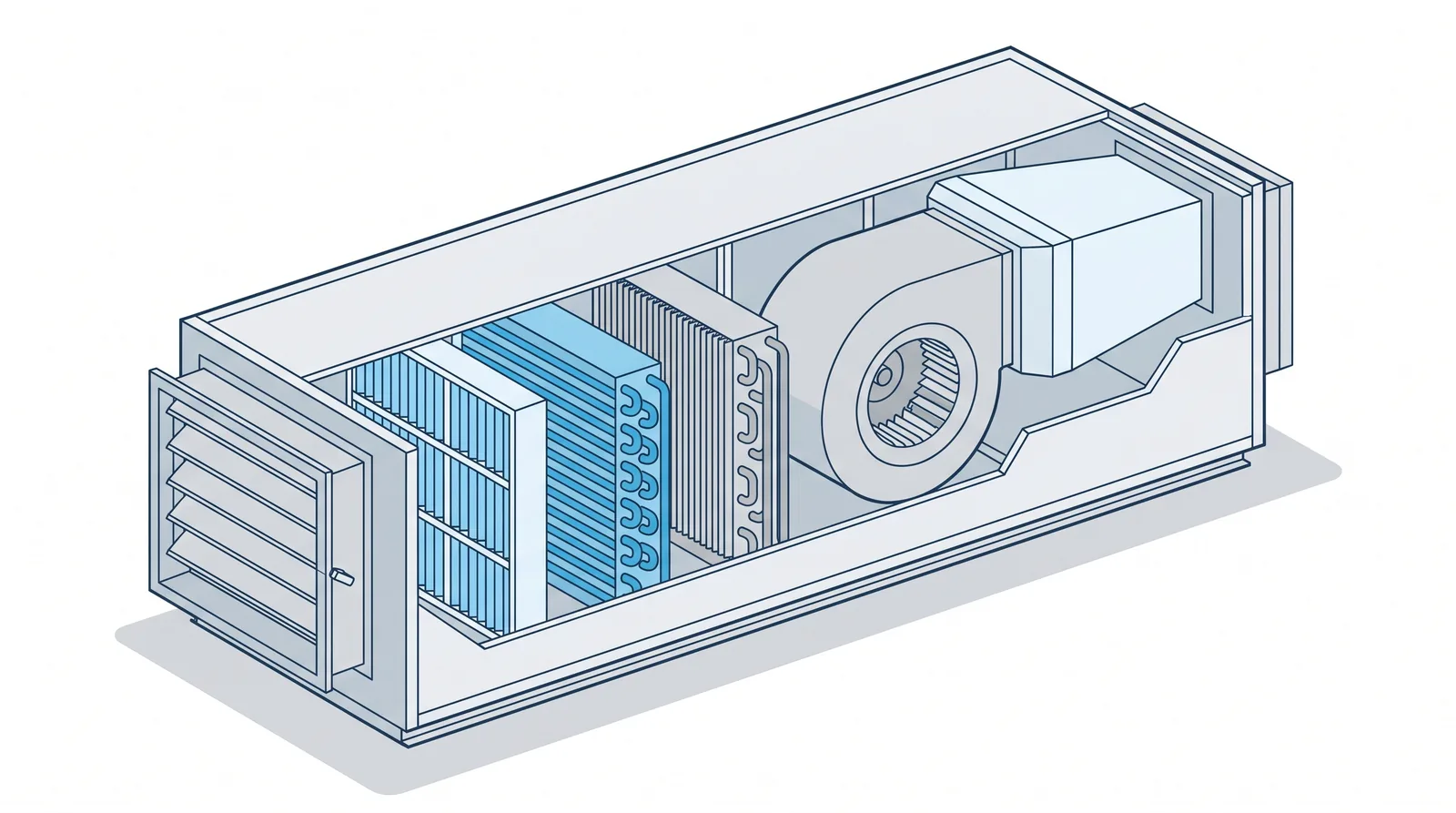
Key Components of HVAC Systems and Their Functions
The key components of an HVAC system, from the AHU and HEPA filtration to coils, blowers and ductwork, and how each keeps a cleanroom controlled.
Ready to move from reading to scoping? Our turnkey cleanroom services cover design, construction and validated handover as one accountable scope.
Talk to the engineers