

Pillar guide
Cleanroom HVAC and validation guides
Two things decide whether a cleanroom actually works: the air system that keeps it clean, and the paperwork that proves it stays clean. This is the part of our blog where those two topics live. If you are trying to understand how cleanroom air is filtered, moved and balanced, or how a finished room is qualified before it goes into use, the guides collected here walk through each idea in plain language first and then in the detail an engineer needs.
Overview
In standards language, that means the cleanroom HVAC side (air-handling units, terminal HEPA filtration to H13 and H14, the pressure cascade between rooms, and the air changes per hour, or ACPH, that hold a given class) and the validation side (Design Qualification, Installation Qualification, Operational Qualification and Performance Qualification, together with HEPA integrity testing and particle counts measured to ISO 14644). The two are one subject read from two ends: HVAC is how the room is built to hold its class, and validation is how you demonstrate, with numbers, that it does. The guides below are grouped so you can start from either end.
01
What cleanroom HVAC actually does
A cleanroom is really an air machine wrapped in walls. Ordinary buildings heat and cool their air; a cleanroom also has to strip particles out of it, push it through the room in a controlled direction, and keep the room at a different pressure from the corridor next door so nothing dirty drifts in. Get the air right and the room holds its class. Get it wrong and no amount of cleaning will save it.
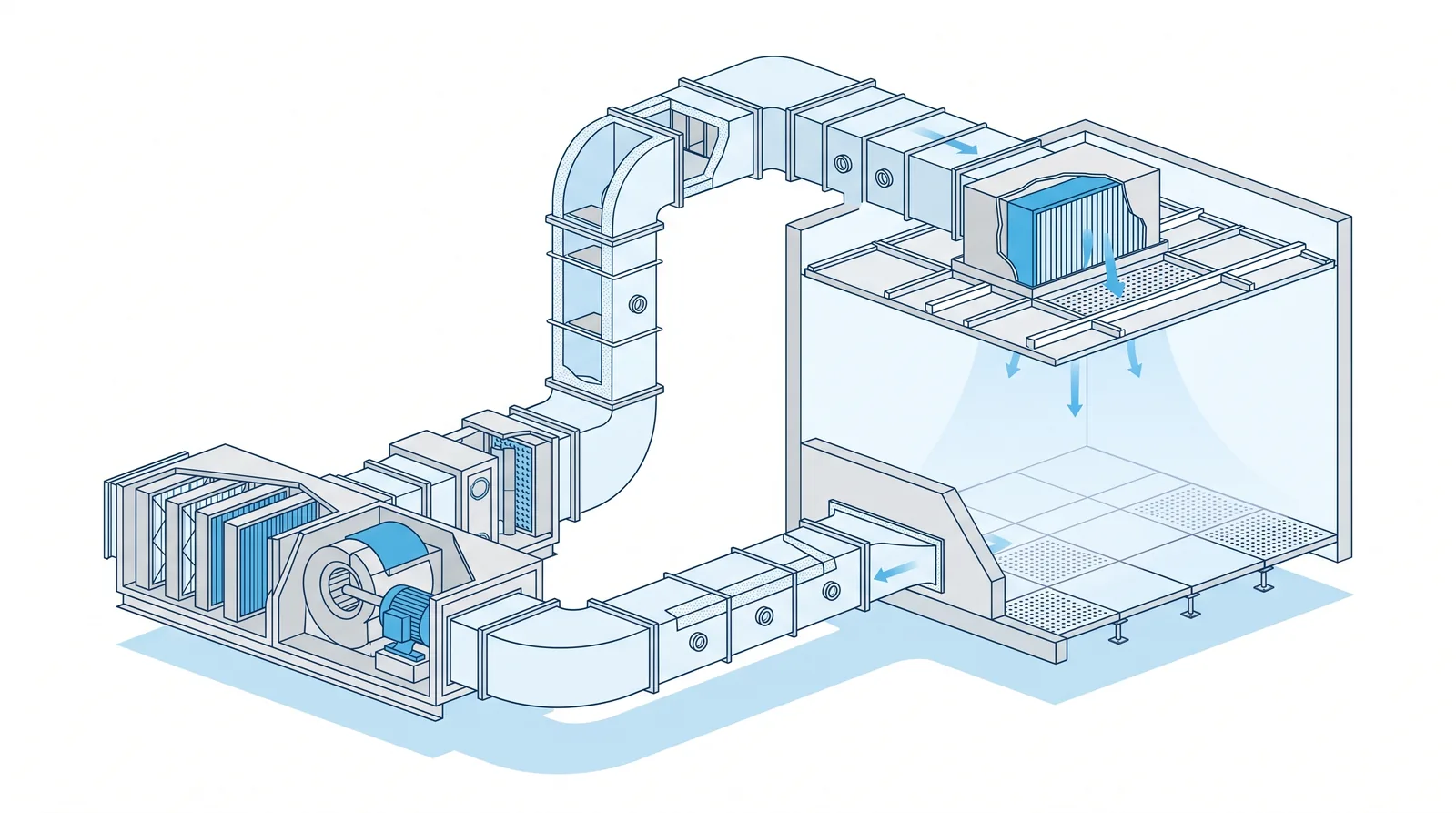
The mechanical parts that do this are the air-handling unit (the AHU that filters, conditions and drives the air), the terminal HEPA filters at ceiling level (H13 removes at least 99.95 percent of the hardest-to-catch particle size, H14 at least 99.995 percent), the ductwork and fan-filter units that distribute the flow, and the controls that set the pressure cascade and the ACPH for each space. The air-change rate scales with how clean the room has to be: a lower ISO class needs many more changes per hour than a general background area. The individual guides below take these parts one at a time.
02
What validation proves
Validation is the documented proof that a cleanroom does what it was designed to do, and keeps doing it. It is not one test at the end; it is a sequence that follows the project from the drawing board to steady operation. Auditors and regulators want to see that sequence, in order, with signatures and data, before they trust the room with a real product.
The sequence is DQ, IQ, OQ and PQ. Design Qualification checks the design against the requirement before anything is built. Installation Qualification confirms every component went in as specified. Operational Qualification tests that the room performs under working conditions, and Performance Qualification proves it holds over time with the process running. Underneath all four sit the measurements that make them real: particle counts classified to ISO 14644-1, HEPA integrity (filter leak) testing, airflow velocity and volume, pressure differentials and recovery time. The guides below explain how these tests are planned and read.
03
Guides in this collection
Each guide stands on its own; read them in any order.
Guide · 10 min read
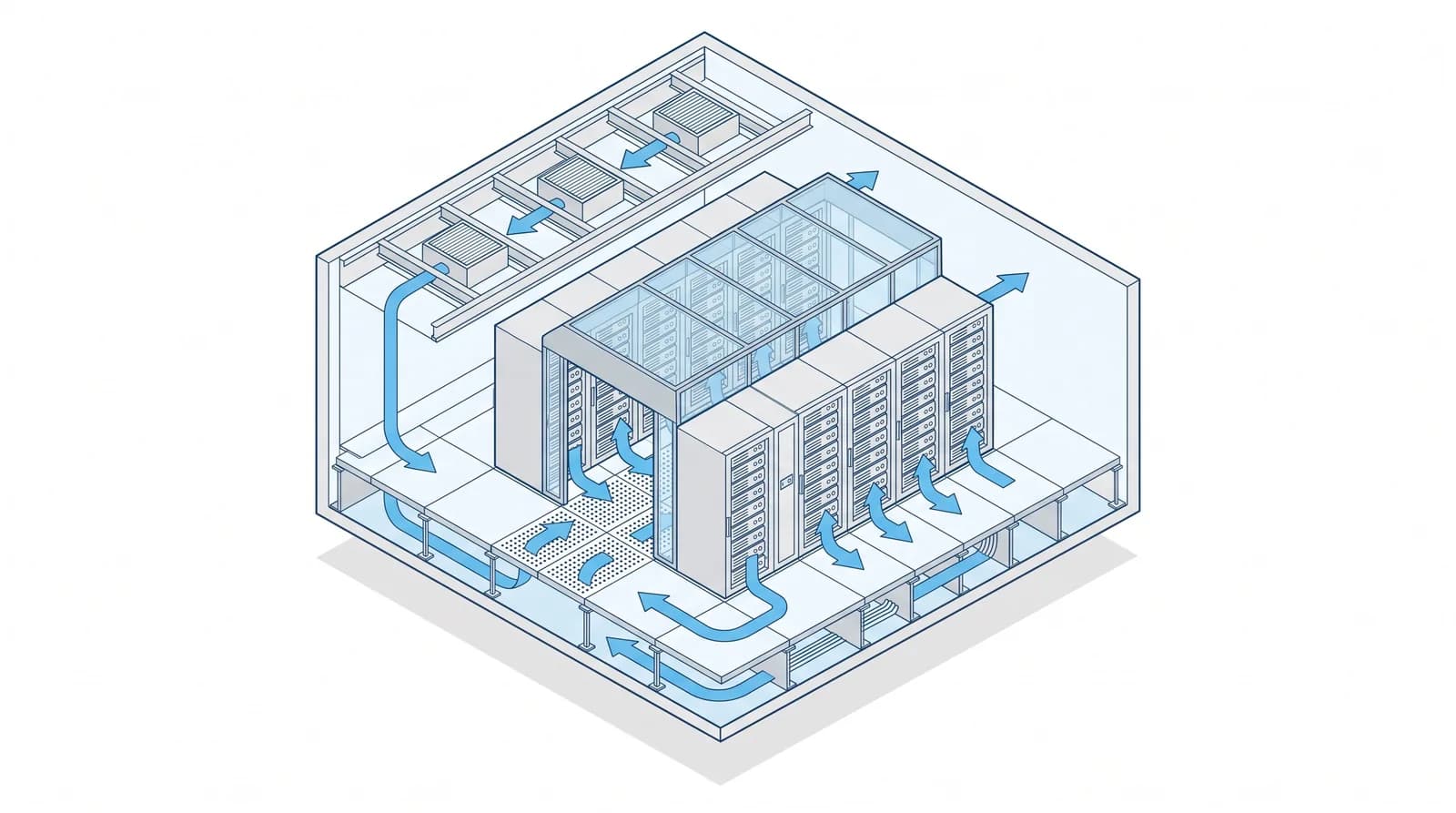
Airflow Design: How Cleanrooms for Data Centres Improve Server Performance
How cleanroom airflow design, HEPA/ULPA filtration and laminar airflow control heat, dust and cooling to lift data centre server performance.
Guide · 9 min read
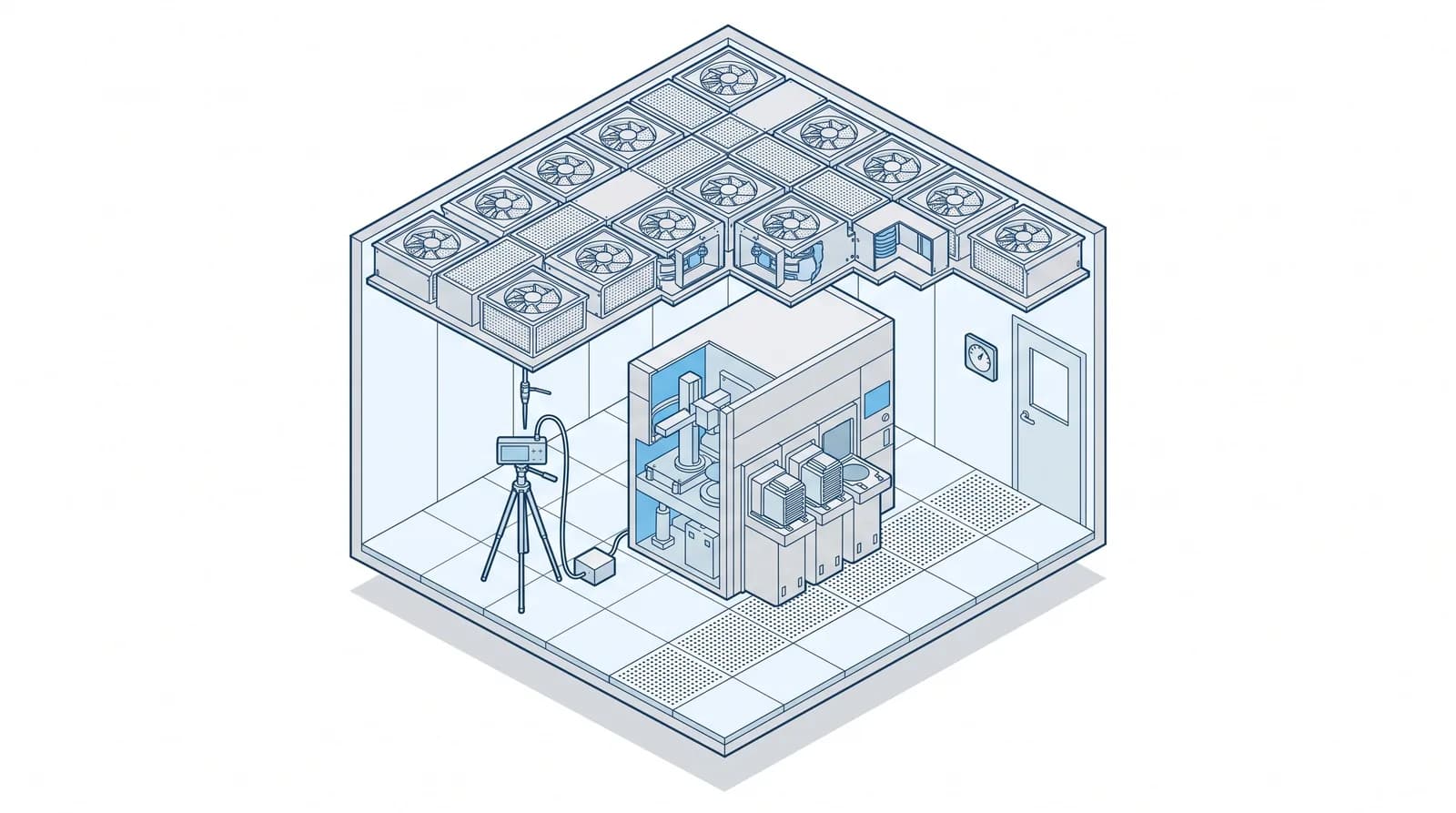
Cleanroom and HVAC Validation: The Invisible Backbone of Semiconductor Manufacturing
How cleanroom and HVAC validation, from DQ and IQ to OQ and PQ, protects semiconductor manufacturing from particle, humidity and ESD defects.
Guide · 7 min read
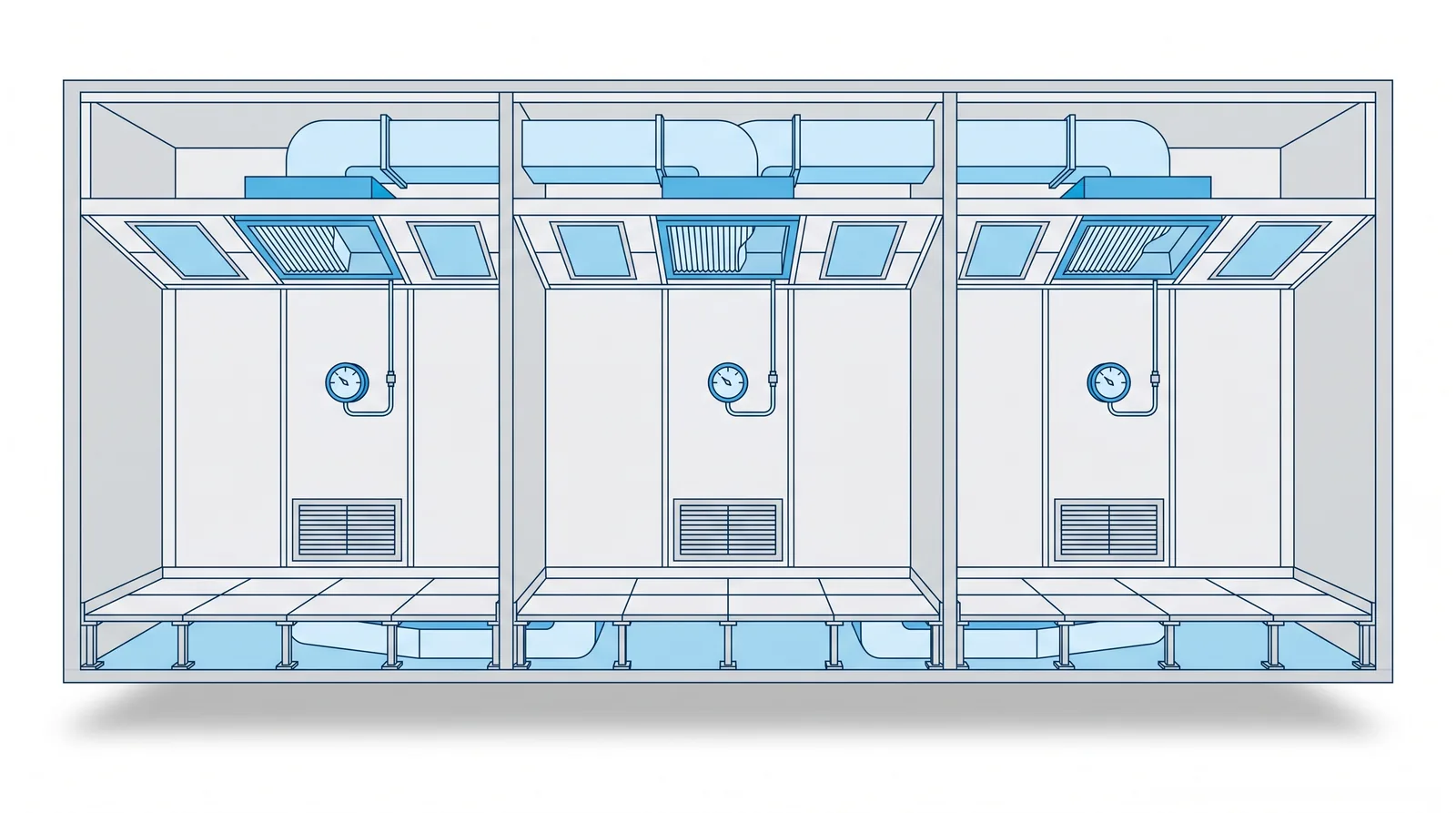
Consistency: The Quiet Discipline Behind Cleanroom Performance
How consistency in cleanroom design, HVAC, monitoring and IQ/OQ/PQ validation keeps environmental control stable, batch after batch, in manufacturing.
Guide · 7 min read
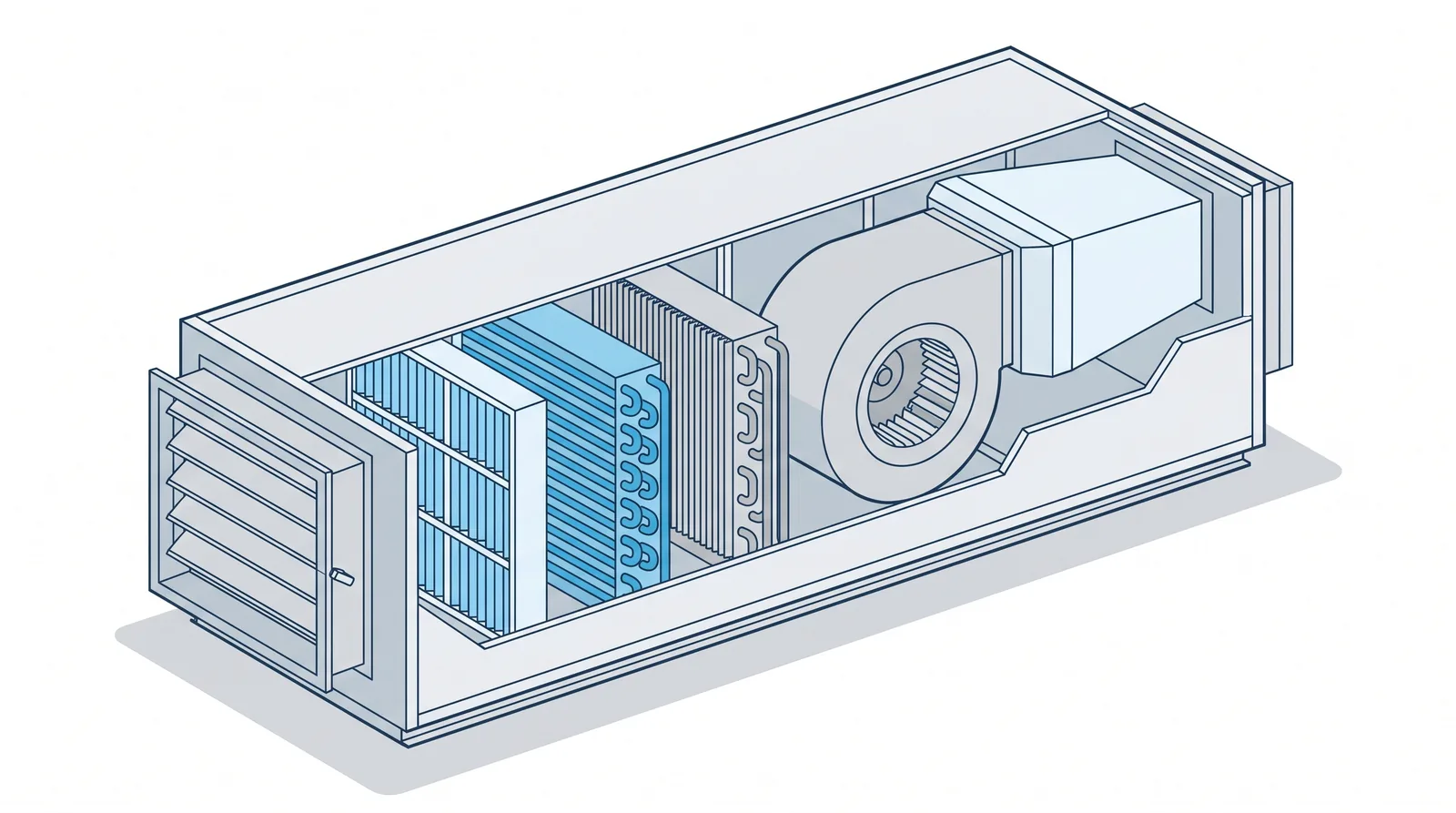
Key Components of HVAC Systems and Their Functions
The key components of an HVAC system, from the AHU and HEPA filtration to coils, blowers and ductwork, and how each keeps a cleanroom controlled.
04
When you are ready to build or validate a room
These guides are here to explain the subject, not to scope your project. When you have a real room to design, condition and qualify, the work itself lives on our service pages.
If you need the air system engineered, from AHU selection and HEPA specification to the pressure cascade and ACPH that hold your target class, that is covered on the cleanroom HVAC services page. If you need a finished room qualified, with the full DQ, IQ, OQ and PQ dossier, HEPA integrity testing and particle counts to ISO 14644, that is the cleanroom validation and qualification page. Both are handled by one engineering team, so the room that is designed is the room that gets qualified.
Frequently asked questions
Cleanroom HVAC is the air system that keeps a controlled environment clean, not just heated and cooled. It filters the air through HEPA filters (H13 removes at least 99.95 percent, H14 at least 99.995 percent of the most penetrating particle size), moves it through the room in a controlled direction using an air-handling unit and fan-filter units, sets the number of air changes per hour needed for the target class, and holds each room at a controlled pressure relative to its neighbours so contamination cannot drift in.
A pressure cascade is the deliberate difference in air pressure between adjacent rooms. Cleaner rooms are usually held at a higher pressure than the spaces around them, so when a door opens, air flows out of the clean space rather than into it. This keeps particles from migrating toward the critical area. The direction can be reversed for rooms handling hazardous material, where the aim is to contain rather than protect.
ACPH stands for air changes per hour, the number of times the full volume of air in a room is replaced each hour. It matters because it controls how quickly airborne particles are diluted and swept out. A cleaner room needs a higher air-change rate to hold its class, so ACPH is one of the main levers used to design a cleanroom to a given ISO class.
They are the four stages of cleanroom qualification. Design Qualification checks the design against the requirement before construction. Installation Qualification confirms every component was installed as specified. Operational Qualification tests that the room performs under working conditions. Performance Qualification proves the room holds its performance over time with the process running. Together they form the documented evidence that a cleanroom does what it was designed to do.
HEPA integrity testing, sometimes called a filter leak test, checks that an installed HEPA filter and its housing have no leaks that would let unfiltered air through. A test aerosol is introduced upstream and the downstream face is scanned for penetration. It is part of validating a cleanroom, because a filter that performs in the lab still has to be proven leak-free once it is installed in the ceiling.
By counting airborne particles and comparing them against the limits for a target class in ISO 14644-1. A calibrated particle counter samples the air at set locations, and the counts at each measured particle size are checked against the class limit. A room passes its classification when the counts stay within the limit under the agreed operating state.