

Modular Cleanroom vs Prefabricated Cleanroom: What's the Real Difference?
All modular cleanrooms are prefabricated, but not all prefabricated ones are modular. A practical engineering look at how they differ and when to use each.
9 min read · a working guide by the Fabtech Cleanrooms engineering team · first published 2026-05-07
The guide
My son builds LEGO the way we build cleanrooms, though it took a quiet Sunday on the living-room floor for me to notice it. Both start from standardised, repeatable units that click together into a defined structure. After finishing his small LEGO room, he decided to expand it, adding new sections without disturbing what was already built.
That moment brought another parallel into focus: scalability.
As I tried to explain this, he asked a surprisingly sharp question. Are modular and prefabricated cleanrooms the same, or are they different?
It is a question that comes up often, even within the industry. So let us look at it from a more practical, engineering perspective.
Although the terms modular and prefabricated are often used interchangeably, they represent two distinct approaches to cleanroom construction. Understanding the difference matters when you are planning a new facility or upgrading an existing one.
01
Understanding prefabricated cleanrooms
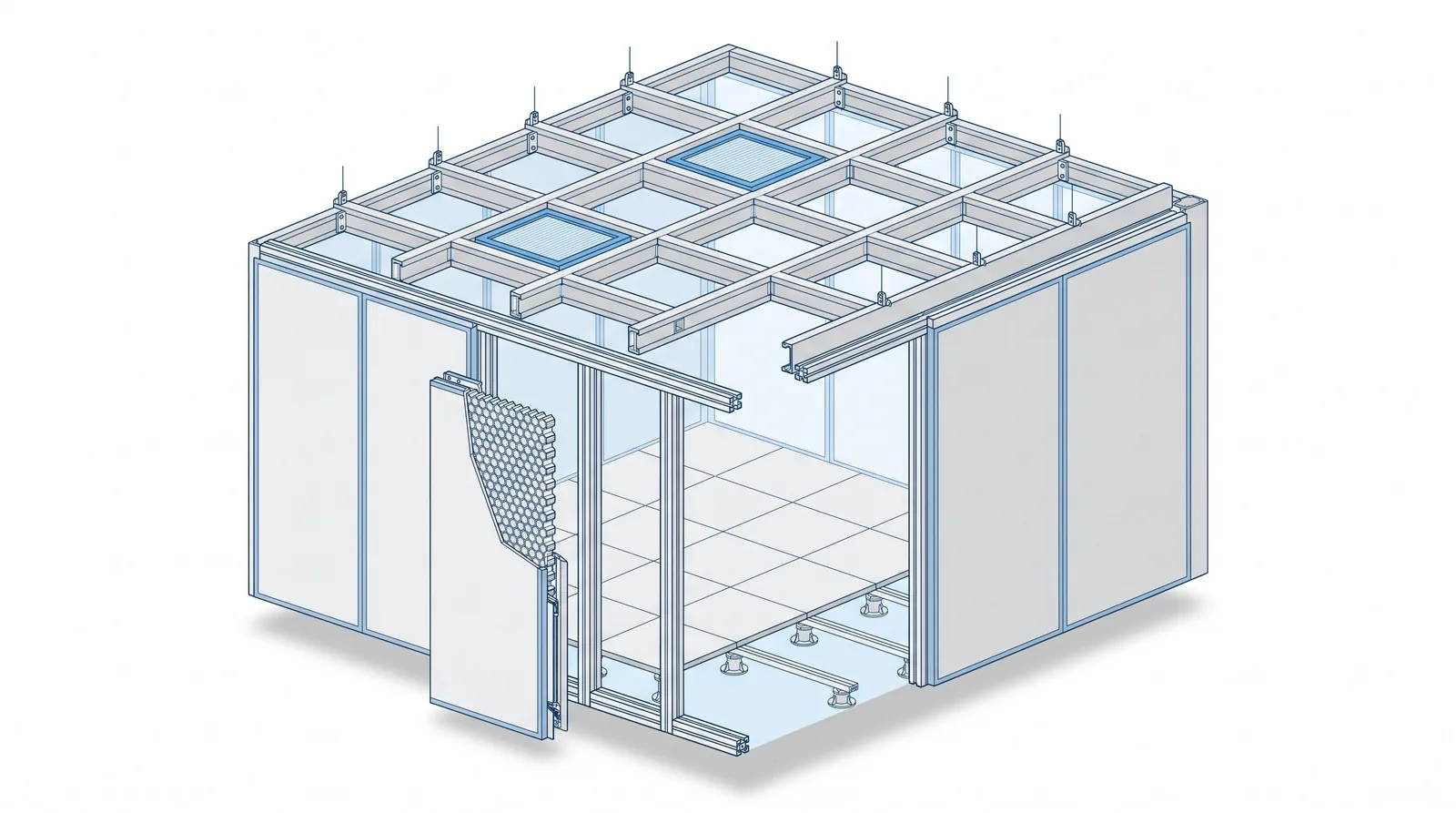
Prefabricated cleanrooms, often referred to as panelised or panel-built systems, are constructed using factory-manufactured components that are assembled on-site.
Instead of building from raw materials at the site, these systems rely on pre-engineered wall panels, ceiling grids, doors, and structural elements that arrive ready for installation.
These components are manufactured in controlled factory environments and offer consistency in dimensions, finishes, and material quality. Once transported to the site, they are installed to form the cleanroom envelope.
This method reduces many of the uncertainties associated with traditional construction. Environmental factors such as dust, humidity, and on-site work variations are largely eliminated during fabrication, resulting in better overall quality control.
02
Where prefabricated cleanrooms excel
Prefabricated systems are particularly effective when requirements are clearly defined and unlikely to change over time.
Speed and predictability
Prefabricated construction can be carried out through off-site manufacturing and on-site preparation simultaneously. This parallel workflow significantly shortens project timelines and allows for faster deployment and capacity expansion.
Consistency in quality
Because components are manufactured in controlled factory environments, prefabricated cleanrooms offer a high level of uniformity. Panel finishes, joint integrity, and material specifications remain consistent across the build, supporting compliance with GMP and other regulatory standards.
Simplified installation
With much of the fabrication completed off-site, installation becomes more streamlined. This reduces the dependency on on-site labour, simplifies logistics, and lowers construction risks. It is particularly beneficial in brownfield projects, where minimising disruption to ongoing operations is a key concern.
That said, prefabricated cleanrooms are best suited to facilities with stable processes. Once installed, making structural or layout changes can be more complex compared to modular systems.
For pharmaceutical manufacturing lines with fixed workflows, medical device assembly units, and certain electronics applications, however, this trade-off is often acceptable in exchange for speed and consistency.
03
What makes modular cleanrooms different?
Modular cleanrooms take prefabrication a step further. While they may use similar panel systems, they are designed from the outset for flexibility, reconfiguration, and phased expansion.
In some cases, modular cleanrooms include volumetric or 3D units. These are pre-engineered sections that are manufactured off-site and assembled as complete spaces. More commonly in pharmaceutical environments, however, modularity comes from how panel systems, structures, and services are designed to be reconfigured over time.
What sets modular cleanrooms apart is not just how they are constructed, but how they adapt.
Flexibility in layout
Modular cleanrooms are inherently flexible. They are engineered to allow changes in layout without major reconstruction. Wall panels, ceiling systems, and structural interfaces are designed for repeatable assembly and disassembly. This allows zones to be redefined, spaces to be reconfigured, and workflows to be adjusted with minimal disruption.
In industries like pharmaceuticals and biotechnology, where process requirements evolve due to new products, regulatory updates, or scale changes, this flexibility becomes a practical advantage.
Scalability without disruption
Expansion in modular systems is more straightforward. Additional sections can be integrated into the existing cleanroom without dismantling large portions of the structure. This supports phased capacity expansion, allowing facilities to grow in line with demand.
For R&D centres, pilot plants, and multi-product facilities, this ability to scale without extended downtime is often critical.
Integrated engineering approach
Modular cleanrooms also allow better coordination of building systems. HVAC zoning, pressure cascades, utility routing, and filtration systems can be planned with future modifications in mind.
For example, pressure differentials between clean zones can be maintained even as layouts evolve, provided the system is designed modularly from the start. Similarly, utility corridors and service integration can be structured to support future extensions without major rework.
04
A practical way to look at it
While both approaches rely on prefabrication, their priorities differ.
Prefabricated cleanrooms focus on execution efficiency, delivering a well-defined design quickly, with high consistency and minimal on-site complexity.
Modular cleanrooms focus on operational flexibility, allowing the facility to adapt, expand, or reconfigure as requirements change.
The choice between the two is less about which is better and more about how stable or dynamic your process environment is expected to be.
05
Choosing the right approach
If your facility is designed around a fixed process with minimal expected changes, a prefabricated cleanroom offers a reliable and efficient solution. It enables faster commissioning, controlled quality, and predictable performance.
On the other hand, if you anticipate evolving workflows, multiple product lines, or phased expansion, a modular cleanroom provides the flexibility to adapt without significant reconstruction.
In greenfield projects with long-term growth plans, modular design can help future-proof the facility. In brownfield expansions where speed and minimal disruption are key, prefabricated systems often have the advantage.
06
The hybrid way
In practice, many facilities combine both approaches.
Core production areas, where processes remain stable, may be executed using prefabricated construction for speed and consistency. Adjacent areas, such as support zones, corridors, or future expansion sections, can be designed modularly to allow changes over time.
This hybrid strategy creates a balance. It allows organisations to optimise initial project timelines while retaining the flexibility to adapt as operational needs evolve.
07
The Fabtech perspective
At Fabtech Cleanrooms, the focus is not limited to how a cleanroom is built, but how it performs as a complete system.
Whether modular or prefabricated, the effectiveness of a cleanroom depends on how well critical parameters, such as airflow patterns, pressure cascades, temperature, humidity, and contamination levels, are controlled. These are not standalone elements and must function together seamlessly.
Our approach integrates these systems from the design stage itself. Structural elements, panel systems, HVAC design, and utility interfaces are aligned with process requirements so the room performs consistently from day one. The way a full project runs, from design through construction to a validated handover, is set out on our cleanroom design and build service. The wall and ceiling systems that form the envelope are covered on our modular cleanroom panels page, and the air system that holds the class is covered on our cleanroom HVAC page.
Both modular and prefabricated approaches offer clear advantages. The key lies in selecting, and sometimes combining, them in a way that supports both immediate operational goals and future requirements. You can see how that plays out on a real regulated build in the Ajanta Pharma cleanroom case study.
08
Designing cleanrooms with the future in mind
At its core, cleanroom design is about enabling processes to run safely, efficiently, and consistently.
Prefabricated cleanrooms bring speed, precision, and execution control. Modular cleanrooms bring flexibility, scalability, and long-term adaptability.
The right choice depends on how these strengths align with your operational goals, regulatory requirements, and long-term plans. And in many cases, the most effective solution is not choosing one over the other, but using both where they make the most sense.
Much like building with LEGO, the strength of the structure lies not just in the blocks themselves, but in how thoughtfully they are put together.
Keep reading
More from design and build
Guide · 9 min read
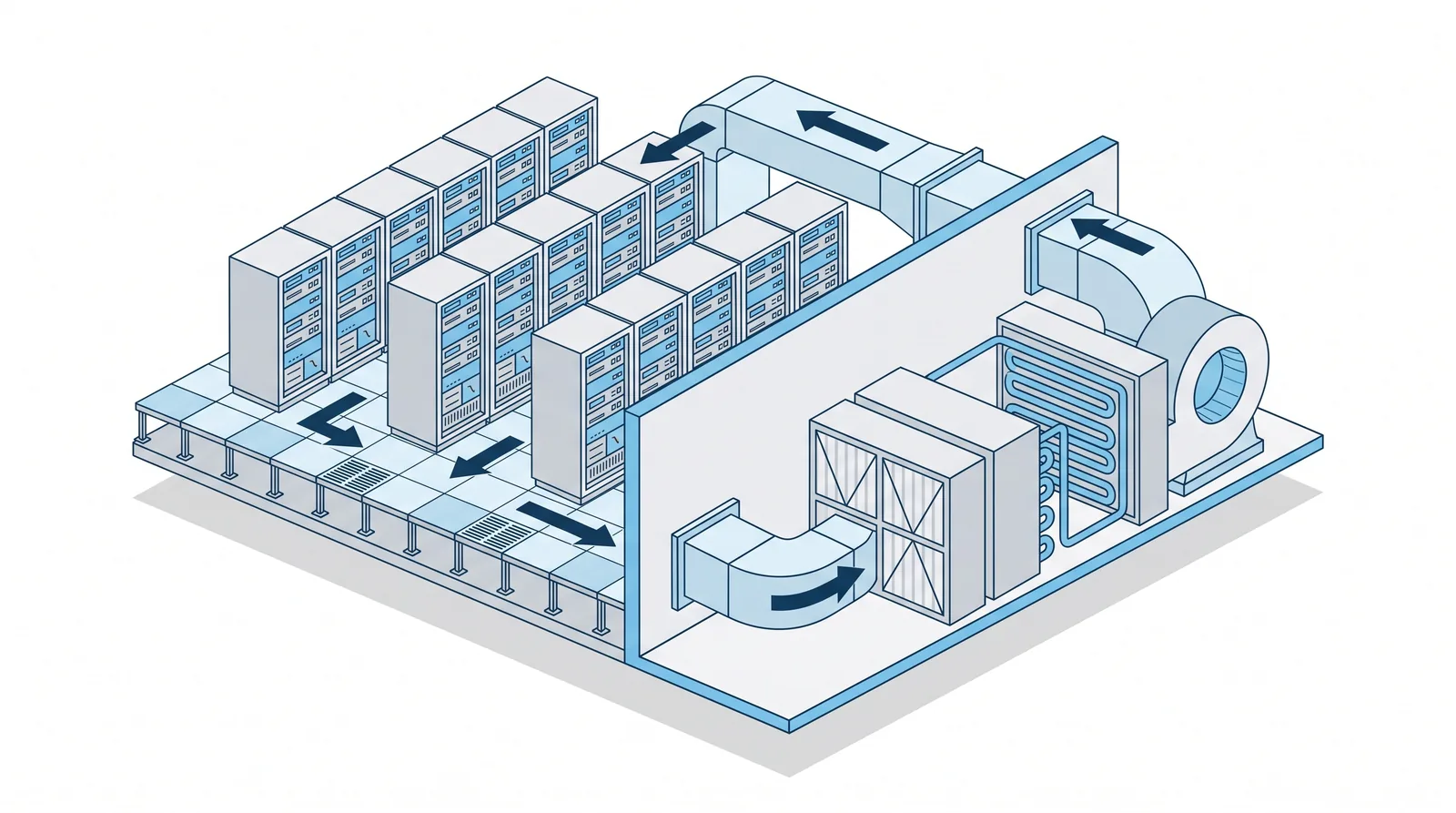
Cleanrooms for Data Centres: The Intelligent Infrastructure Behind the Digital World
How cleanroom systems protect data centre equipment with HEPA/ULPA filtration, controlled airflow, and precise temperature, humidity and particle control.
Guide · 8 min read
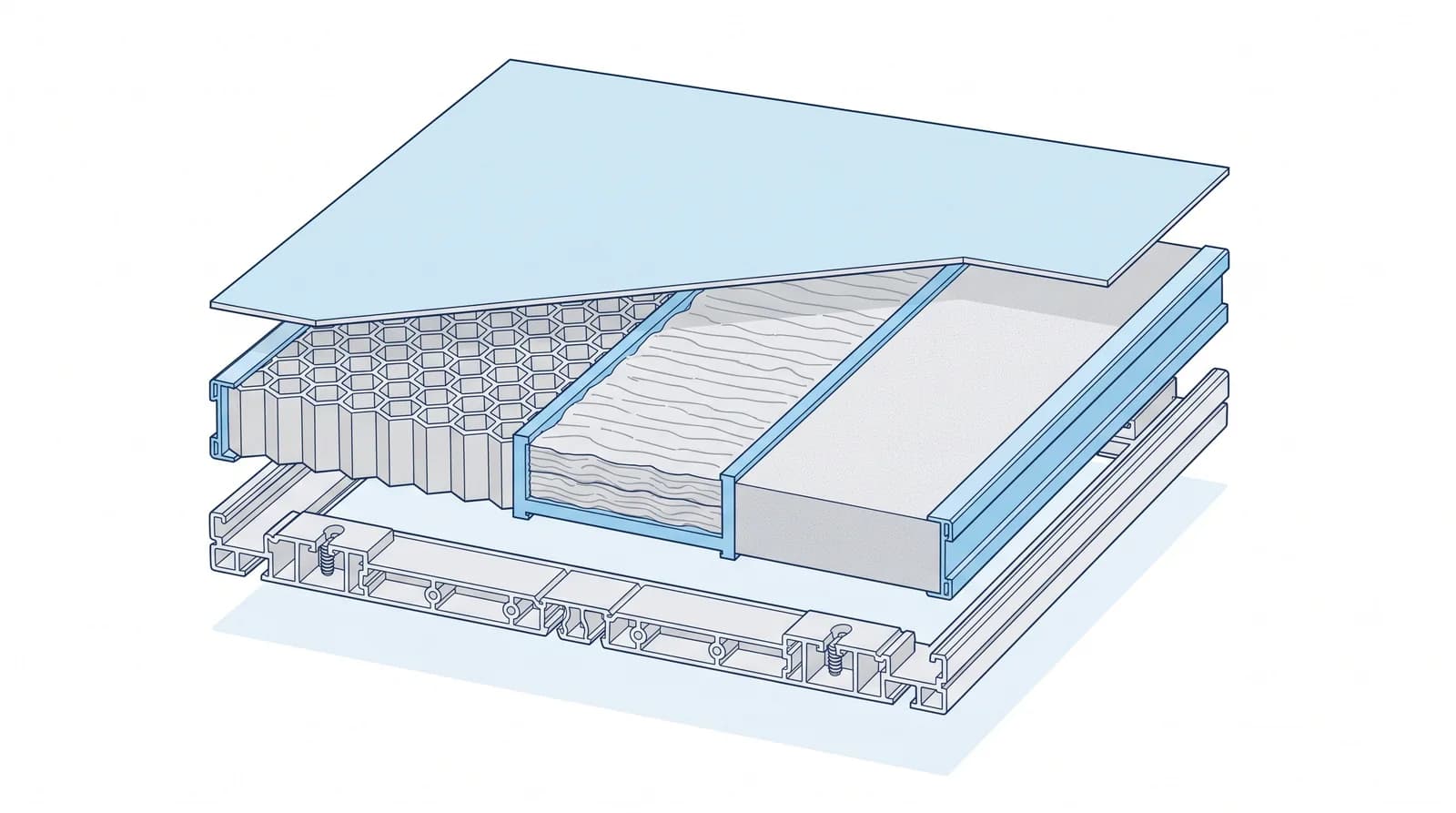
A Guide to Cleanroom Panels and Infill Materials Across Industries
A technical guide to cleanroom wall panels and infill core materials for pharmaceutical, solar, electronics and semiconductor cleanrooms.
Guide · 8 min read
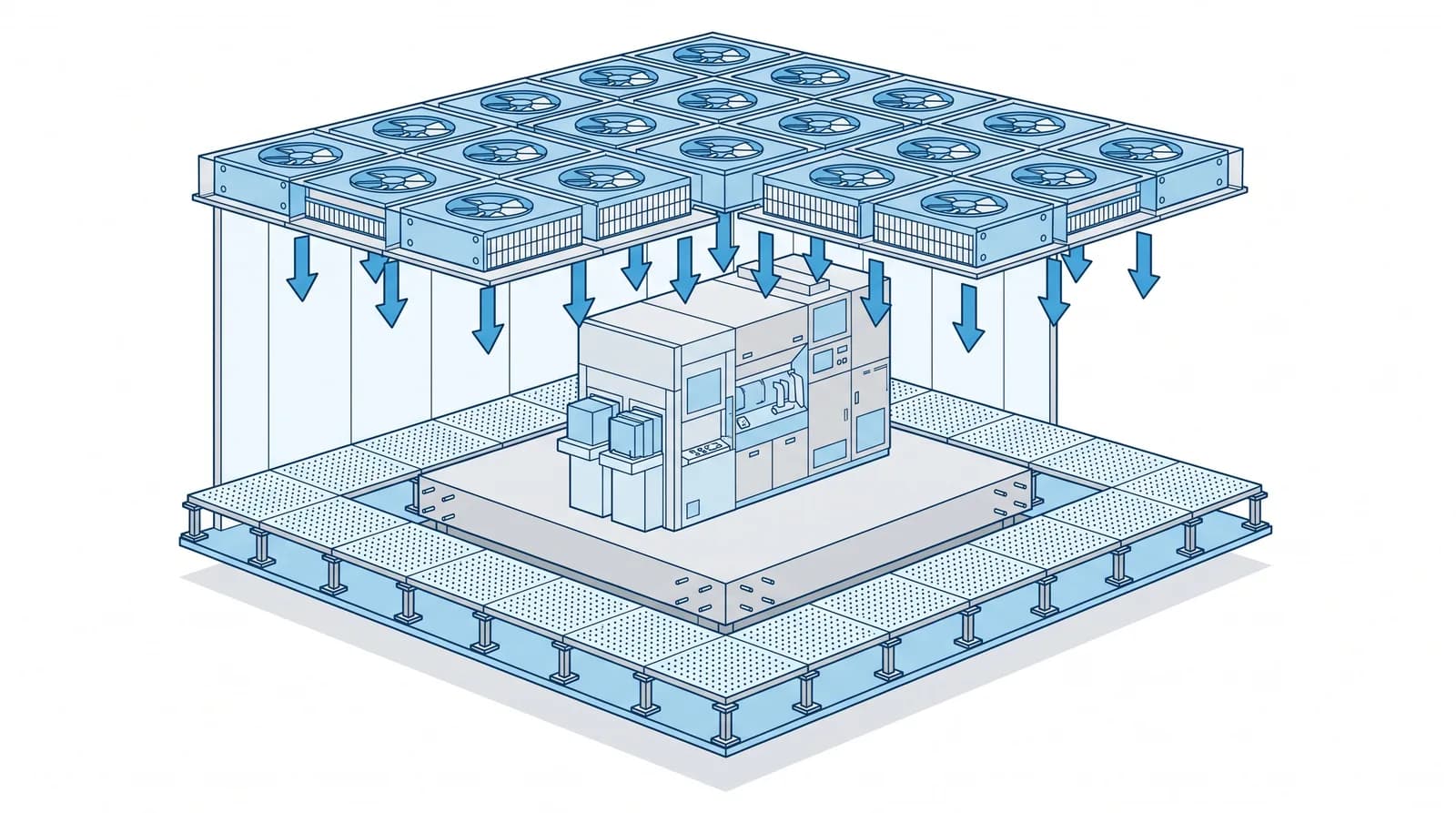
How Modular Cleanrooms Satisfy Semiconductor Requirements
How modular cleanrooms meet semiconductor fab requirements: panel engineering, HEPA/ULPA HVAC, laminar airflow, vibration isolation and monitoring.
Ready to move from reading to scoping? Our turnkey cleanroom services cover design, construction and validated handover as one accountable scope.
Talk to the engineers