

Cleanrooms for Data Centres: The Intelligent Infrastructure Behind the Digital World
How cleanroom systems protect data centre equipment with HEPA/ULPA filtration, controlled airflow, and precise temperature, humidity and particle control.
9 min read · a working guide by the Fabtech Cleanrooms engineering team · first published 2025-05-29
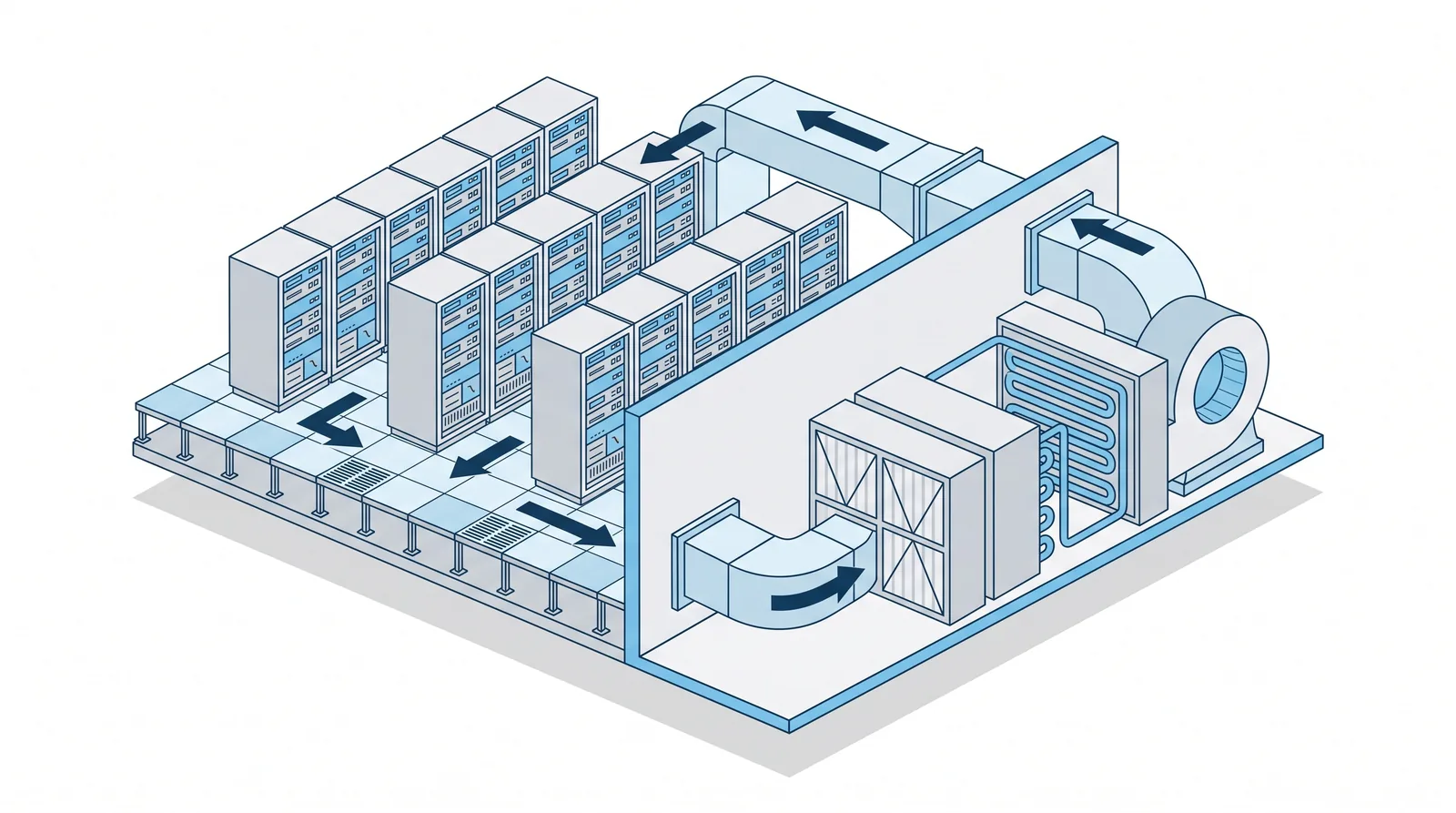
The guide
From the time the world invented its first computer to the fast-evolving fields of artificial intelligence and cloud computing, technology has moved at an unprecedented pace. But this evolution is not just about what we see on the surface. It is also about what happens behind the scenes.
As the volume of global data continues to rise, so does the need for a robust infrastructure to store, process and manage it, giving rise to what we now know as data centres.
These data centres require optimum operating conditions, such as controlled temperature, humidity and airflow, to ensure the reliability, performance and longevity of their critical equipment. This is where cleanroom systems come into play. By minimising contamination from dust, dirt and airborne particles, cleanrooms help maintain these precise environmental conditions.
At Fabtech Cleanrooms, we bring decades of cleanroom engineering experience to building the controlled environments that meet the exacting needs of data centres. Here is how our solutions make a difference.
1. Protecting sensitive equipment
Data centres house expensive and delicate equipment. Dust and other particles can interfere with cooling systems, causing overheating and equipment malfunctions that lead to downtime and costly repairs. Cleanroom panels reduce these risks by serving as a barrier that creates a controlled environment with strict air filtration and particle control. Cleanrooms mitigate these risks further by using highly efficient HEPA or ULPA filters that trap particles as small as 0.3 microns. This helps preserve the integrity of sensitive electronics and extends the operational lifespan of expensive infrastructure.
2. Meeting industry cleanliness standards
Many data centres work to meet global cleanroom standards such as ISO 14644-1, which specifies particle concentration levels for cleanrooms. Data centres typically target ISO Class 8 or higher, which is appropriate for server rooms and IT facilities. Fabtech's cleanroom designs are tailored to meet these standards and support compliance and quality assurance.
3. Enhancing air quality
Cleanrooms use clean-air solutions such as HEPA filters for laminar airflow, along with advanced airflow systems, to remove airborne particles and improve air quality within the data centre. This creates a more comfortable and healthier environment for personnel and reduces the risk of contamination. Data centres often replace the air in the facility 30 to 50 times per hour, far more frequently than the typical 2 to 6 air changes per hour (ACPH) in a standard commercial building. This rapid air exchange helps remove contaminants and maintain clean air.
4. Contamination control
Core electronic components of data centres, such as high-density servers and hard drives, are highly sensitive to dust particles, which can cause short circuits, overheating, corrosion, insulation failure or airflow disruption. Cleanroom systems maintain positive pressure to keep external contaminants out, while filtration systems hold ultra-clean conditions with consistent air quality.
5. Temperature and humidity regulation
Even minor fluctuations in environmental conditions can affect data centre operations. Cleanroom systems help regulate temperature, typically between 20°C and 24°C, and humidity, usually around 45% to 55%, supporting proper cooling, heat dissipation and balanced airflow. They also reduce the risks of electrostatic discharge (ESD) and condensation. Dehumidifiers and humidifiers are deployed as needed to maintain ideal moisture levels.
6. Protection during equipment assembly and maintenance
Many critical components, such as server racks and switches, are assembled or maintained on-site. Without a clean environment, these operations carry contamination risks. Cleanroom conditions provide a safe space for assembly, upgrades and repairs, reducing the chances of post-maintenance failures and extending system reliability.
7. Supporting next-gen infrastructure
Modern data centres are evolving with technologies like high-density computing, edge and micro data centres, and AI and machine-learning servers. These systems generate more heat and require tighter tolerances and more advanced cooling. Cleanroom conditions provide the stability these next-generation infrastructures need to operate efficiently and without interruption.
8. Lower downtime, reduced maintenance and cost efficiency
Data centre outages are costly, both in operations and in reputation. Clean environments improve equipment reliability, reduce maintenance by preventing dust-induced failures, extend the lifecycle of equipment, and lower the need for frequent internal cleaning and repair. Over the life of the facility, that shows up as a lower total cost of ownership (TCO) and better energy efficiency.
9. Cleaning and maintenance
Regular cleaning and maintenance are crucial in data centres to maintain cleanliness and ensure proper airflow. This includes HEPA filter replacements and sub-floor cleaning, a critical area for airflow and dust accumulation, to keep performance consistent. Cleanrooms also support the monitoring of particulate and gaseous contaminants, particularly in systems that use air-side economisers.
10. Evolving with industry needs
From our early work supporting pharmaceutical and biopharmaceutical cleanrooms, industries with zero tolerance for contamination, Fabtech Cleanrooms has grown with the times. As new industries have come to need cleaner, more controlled environments, we have extended that experience into sectors such as semiconductors, food and beverage, and data centres.
Across every project, we tailor our solutions to align with the client's vision. With a multidisciplinary team, engineered design and turnkey cleanroom solutions, we help future-proof your infrastructure and raise operational standards. The way a full project runs, from design through construction to a validated handover, is set out on our cleanroom design and build service. The wall and ceiling systems that form the clean envelope are covered on our modular cleanroom panels page.
At Fabtech Cleanrooms, we believe the future of digital infrastructure is clean, controlled and compliant. As data continues to shape the world, we are building the environments that keep it safe. For how a controlled environment is scoped for high-density computing, see our cleanroom solutions for data centres.
Related reading: for the airflow theory behind these environments, including containment, pressure cascades and how air movement is engineered for high-density racks, see our companion post on cleanroom airflow design and data centre performance.
One example of a Fabtech cleanroom designed, built, validated and handed over is the Ajanta Pharma cleanroom project in Aurangabad.
Looking to upgrade or design a cleanroom for your data centre? Get in touch with our engineers today to explore tailored solutions for compliance, performance and long-term reliability.
Keep reading
More from design and build
Guide · 8 min read
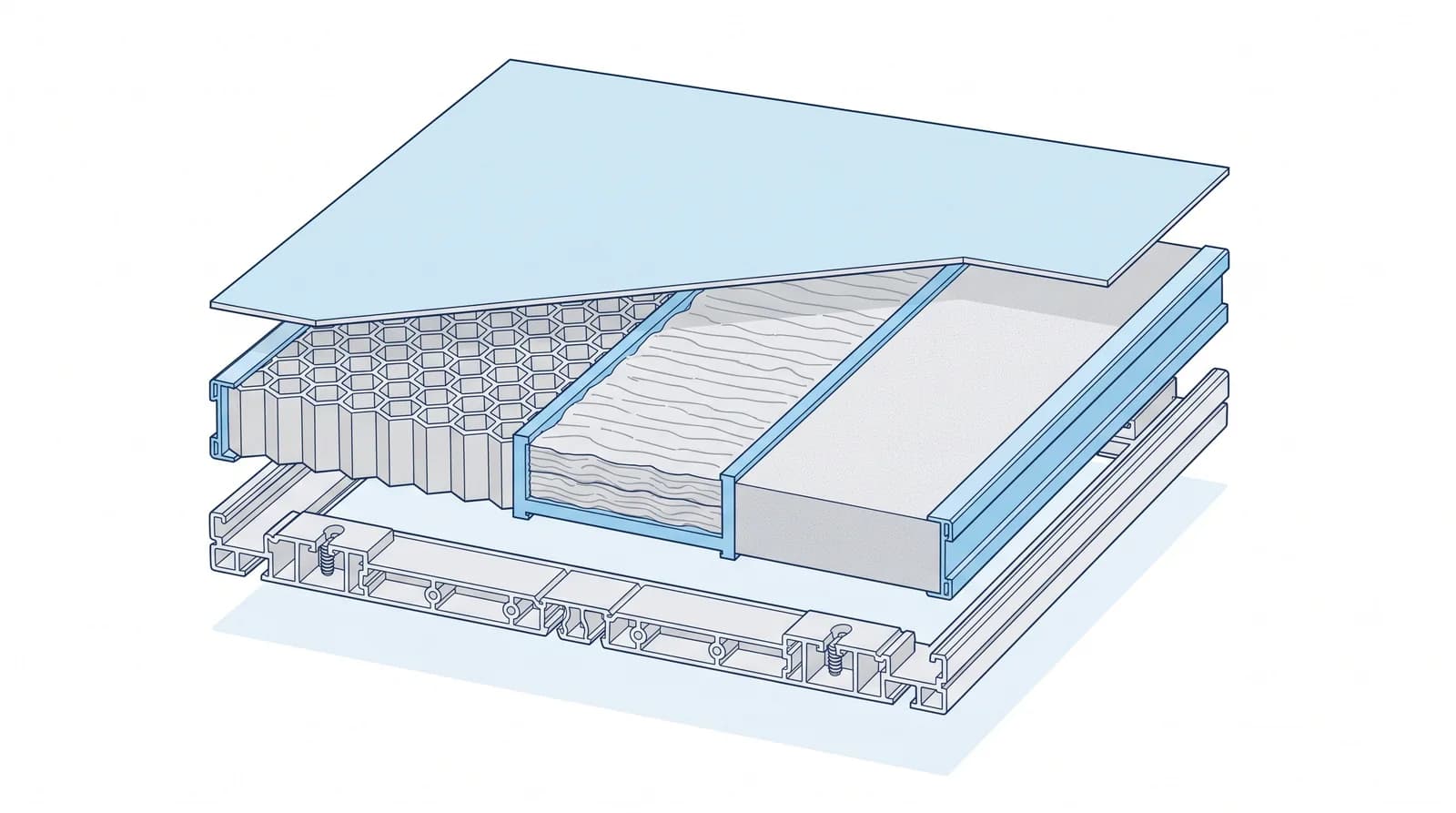
A Guide to Cleanroom Panels and Infill Materials Across Industries
A technical guide to cleanroom wall panels and infill core materials for pharmaceutical, solar, electronics and semiconductor cleanrooms.
Guide · 8 min read
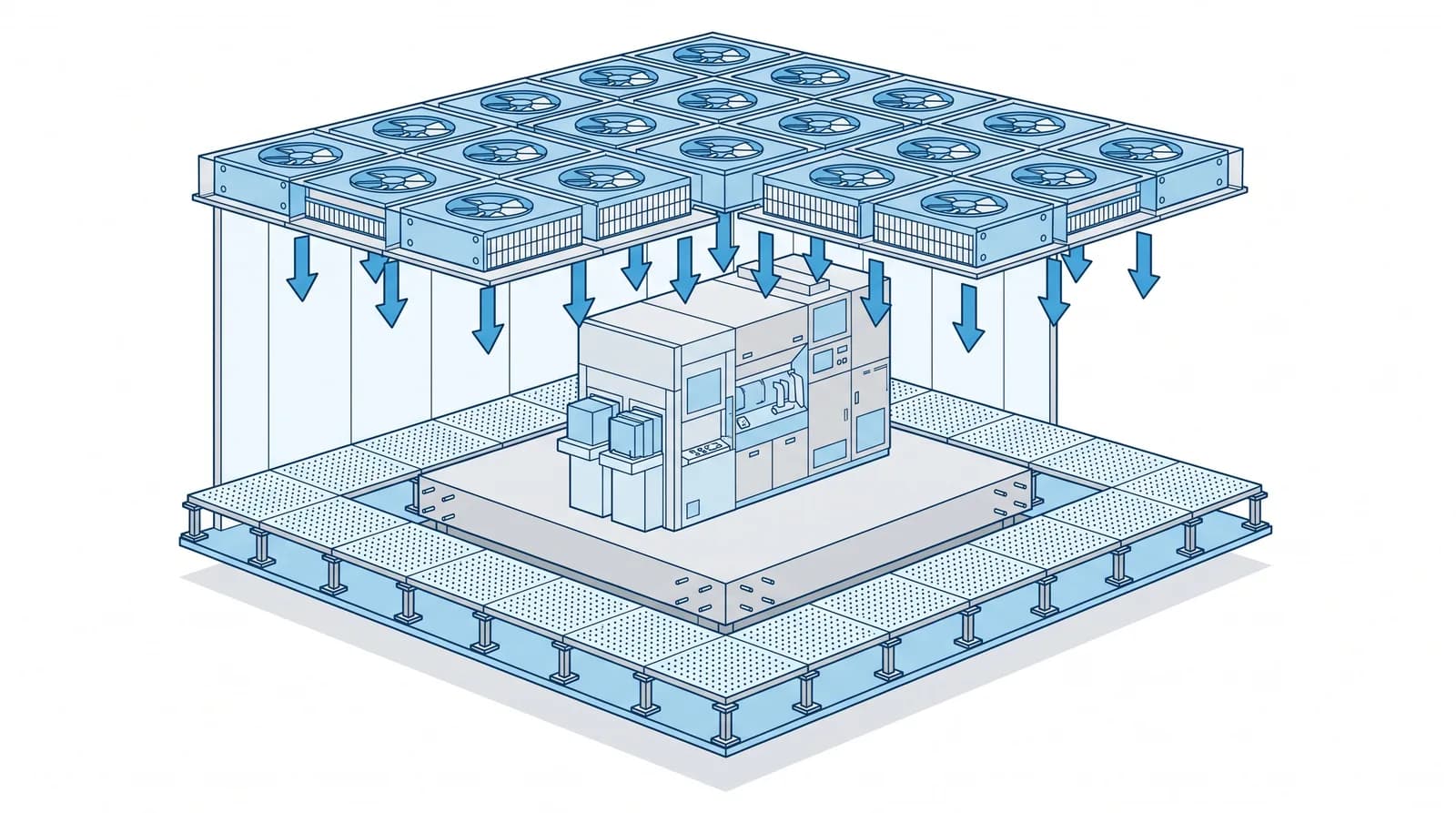
How Modular Cleanrooms Satisfy Semiconductor Requirements
How modular cleanrooms meet semiconductor fab requirements: panel engineering, HEPA/ULPA HVAC, laminar airflow, vibration isolation and monitoring.
Guide · 9 min read
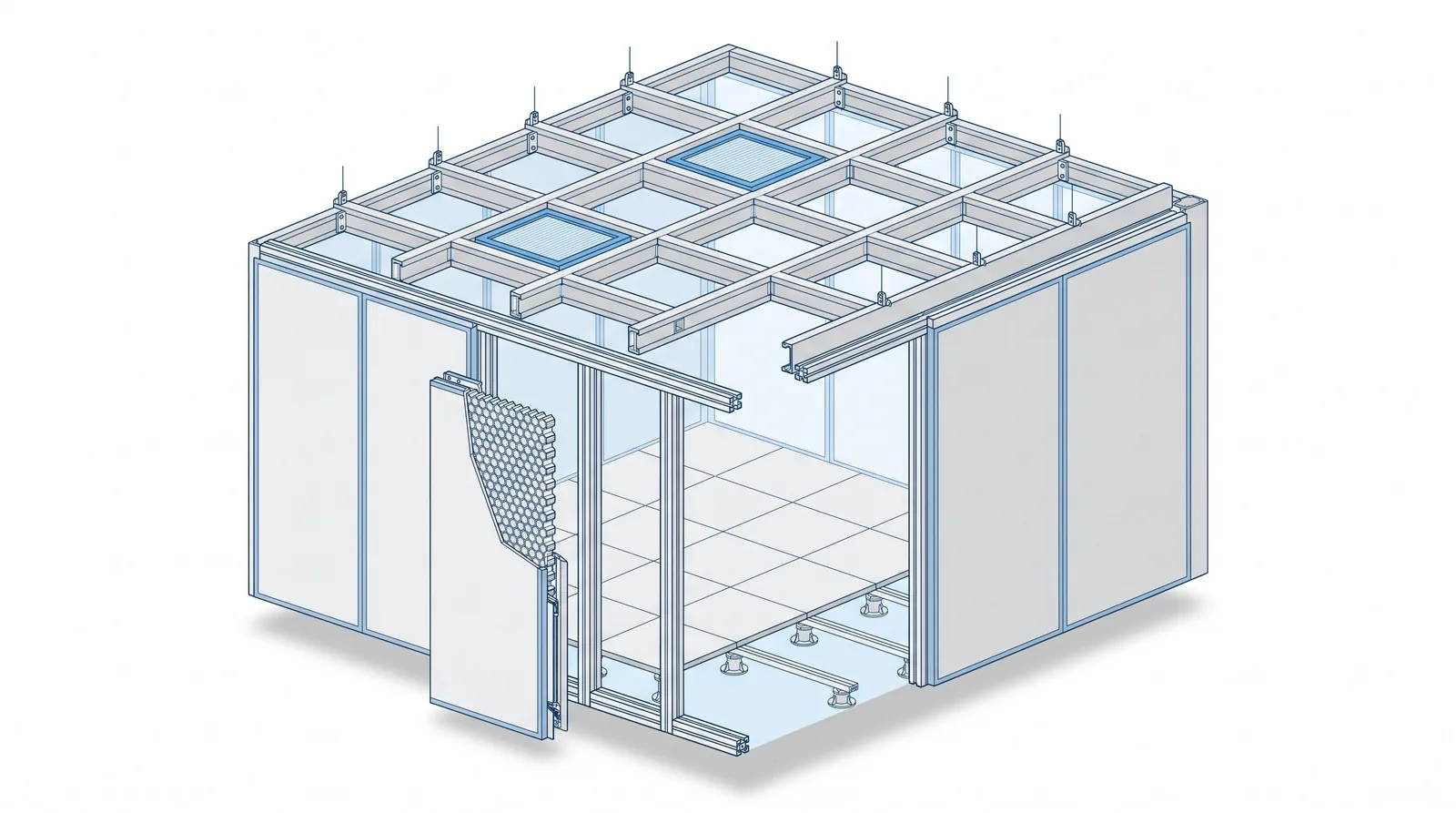
Modular Cleanroom vs Prefabricated Cleanroom: What's the Real Difference?
All modular cleanrooms are prefabricated, but not all prefabricated ones are modular. A practical engineering look at how they differ and when to use each.
Ready to move from reading to scoping? Our turnkey cleanroom services cover design, construction and validated handover as one accountable scope.
Talk to the engineers